
Finding an inexpensive bench grinder for your workshop depends on your power needs and the materials you shape. These machines range from heavy-duty industrial units to compact models for precise, slow-speed sharpening, differing primarily in motor speed, wheel size, and features like lights or variable settings.
Best overall: DEWALT DW758 Bench Grinder, because its high-speed motor and rugged cast iron housing provide the reliable power needed for heavy-duty industrial tasks and long-term durability in a busy shop.
Best for precision: RIKON 80-805 Bench Grinder, as its low-speed motor reduces heat buildup, preventing damage to delicate blades while ensuring the user maintains full control during fine sharpening work.
Best for beginners: WEN BG4260 Bench Grinder, which offers a simple, straightforward design that’s easy to set up and use for everyday tool maintenance without needing complex adjustments or extra settings.
This guide is for anyone looking to add a reliable grinding station to their home workshop or garage.
How We Picked
We compared 48 different Amazon listings to find the most capable tools for various workshop needs. Each selection had to clearly state its motor specs, wheel dimensions, and included safety features to ensure the reader receives accurate information. Products were excluded if their listings lacked essential technical data or failed to specify their intended use. Our focus remained on build quality and functional features rather than promotional claims.
All 10 products side by side — scroll sideways to see every column.
| Top Pick | Best for Small Shops | Best for Sharpening | Best for Visibility | Best for Maintenance | ||||||
| Preview |  |  |  | 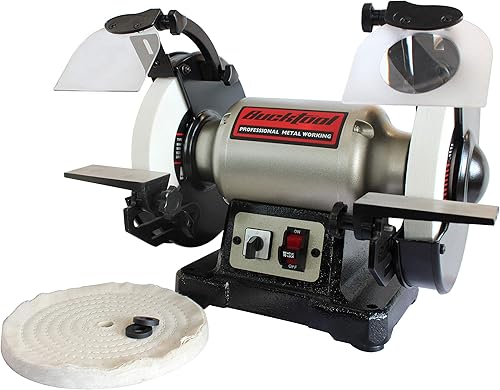 |  |  |  |  |  |  |
|---|---|---|---|---|---|---|---|---|---|---|
| Product | DEWALT DW758 Bench Grinder | DEWALT DW756 Bench Grinder | RIKON 80-805 Bench Grinder | BUCKTOOL Dual Speed Grinder | WEN BG4280 Bench Grinder | WEN BG4282 Bench Grinder | Compact Grinder Sander Combo | Genesis GBG600L Bench Grinder | WEN BG4260 Bench Grinder | VEVOR 6-Inch Bench Grinder |
| Brand | DEWALT | DEWALT | RIKON Power Tools | Bucktool | WEN | WEN | Greteefor | Genesis | WEN | VEVOR |
| Best for | Best Overall | Best for Small Shops | Best for Sharpening | — | — | Best for Visibility | — | — | Best for Maintenance | — |
| The listing says | 3/4 HP induction motor Cast iron base and housing | 5/8 HP induction motor Cast iron base and housing | 1/2 HP motor runs 1,750 RPM 8" x 1" 60- and 120-grit wheels | 1/2HP dual-speed induction motor 80 grit and 120 grit wheels | 5-amp variable speed motor 2000 to 3400 RPM range | 4.8-amp motor 8-by-1-inch wheels at 3450 RPM | 6-inch wheel and 2" x 27" belt 2.5A motor with 3600 RPM | 1/2-HP induction motor 3,550 RPM no-load speed | 2.1-amp motor up to 3450 RPM 6-by-3/4-inch wheels | 250W, 2.0A motor at 1750 RPM 36-grit and 60-grit wheels |
| More information | Check Price on Amazon | Check Price on Amazon | Check Price on Amazon | Check Price on Amazon | Check Price on Amazon | Check Price on Amazon | Check Price on Amazon | Check Price on Amazon | Check Price on Amazon | Check Price on Amazon |
1. DEWALT DW758 8-Inch Bench Grinder
Best for: Industrial grinding and heavy-duty material removal.
This 8-inch grinder features a 3/4 HP induction motor that runs at 3,600 RPM. The cast iron base and motor housing are built to withstand heavy use. A 12-1/2-inch distance between the wheels gives you extra room for larger or longer pieces.
The precision-machined aluminum tool rests allow for accurate work positioning. Rear exhaust ports help keep the wheel guards clear for smoother operation during long sessions. This tool is likely too large for someone needing only light, occasional sharpening.
If you’re grinding small hand tools or kitchen knives, this machine is overkill and its speed may lead to accidental metal overheating. Use this model only when you need high-speed material removal on substantial metal parts. If you’re working with long steel stock, the 12-1/2-inch clearance is your primary advantage.
Connect these to a shop vacuum to prevent grit buildup, which otherwise causes vibration and premature wheel wear.
Pros
- Powerful 3/4 HP induction motor
- Durable cast iron construction
- Wide distance between wheels
Cons
- Large footprint on workbench
- Excessive power for delicate sharpening tasks
2. DEWALT 6 Inch Bench Grinder
Best for: Heavy-duty work in limited workshop spaces.
This 6-inch model packs a 5/8 HP motor into a compact frame. It maintains high-speed performance at 3,450 RPM, making it suitable for tough grinding tasks. The cast iron housing provides the same durability as its larger counterparts.
The machine includes precision-machined tool rests to help you hold your work steady. Like the 8-inch version, it features rear exhaust ports for better airflow. It isn’t designed for those who require the extra clearance of an 8-inch wheel.
If you’re working on longer or larger pieces, the 12-1/2-inch distance between the wheels provides the necessary space to maneuver. Use this model when your shop footprint is small but your grinding demands remain industrial. Avoid this unit if your primary goal is fine, delicate finishing, as the high-speed motor is optimized for rapid material removal rather than subtle detail work.
Pros
- Compact 6-inch design
- Strong 5/8 HP motor
- Industrial cast iron housing
Cons
- Smaller wheel size limits clearance for oversized projects
- High-speed motor may be too aggressive for delicate material removal
3. RIKON 80-805 Professional 8-Inch Low Speed Bench Grinder
Best for: Delicate sharpening of woodworking tools.
The 1/2 HP motor runs at a low 1,750 RPM to keep metal cool during sharpening. It comes with two 8-inch wheels, including 60-grit and 120-grit options, to handle both rough shaping and fine finishing. The tool rests are adjustable, and the left one features a specific groove for drill bits.
If you’re shaping heavy steel, the low speed may feel sluggish. Use this grinder when heat control is your priority to prevent ruining the temper of a high-quality chisel or plane iron. If you need to remove large amounts of metal quickly, look for a high-speed model instead.
A cast-iron base with rubber feet works to absorb movement and vibration. You should bolt the unit to a sturdy bench or stand using the provided mounting holes to ensure maximum stability. It also includes adjustable eye shields, spark arrestors, and a diamond wheel dresser.
Check the alignment of your tool rests frequently. This unit is backed by a five-year manufacturer warranty.
Pros
- Low speed prevents overheating
- Includes diamond wheel dresser
- Five-year manufacturer warranty
Cons
- Slower material removal rate
4. BUCKTOOL 8″ 1/2HP Dual Speed Bench Grinder Buffer Combo
Best for: Users who need both grinding and polishing.
This machine offers a 1/2HP dual-speed induction motor, providing steady torque across both settings. Use the slow speed for sharpening woodworking tools, as it prevents overheating. Switch to high speed when you need quick metal removal.
The unit includes 80 and 120 grit white aluminum oxide wheels. These materials are specifically chosen to reduce heat build-up during intense use. You also receive a buffing wheel for finishing tasks, which can be swapped for an 8″x1″ brush wheel with a 5/8″ shaft.
Two cast aluminum tool rests adjust independently. Move them to compensate for wheel wear or to achieve precise sharpening angles. If you notice the machine wobbling, use the mounting holes in the cast iron base to bolt it securely to your workbench.
Avoid this model if you only need a dedicated grinder without buffing capabilities. While the dual-speed motor adds versatility, it requires periodic attention to the tool rests to maintain accuracy. For any after-sales issues, contact the manufacturer directly for support.
Pros
- Dual speed motor flexibility
- Includes buffing wheel
- Sturdy cast iron base
Cons
- Requires periodic wheel adjustments
5. WEN BG4280 5-Amp 8-Inch Variable Speed Bench Grinder with Flexible
Best for: Tasks requiring varied material removal speeds.
The variable speed motor allows you to adjust from 2,000 to 3,400 RPM. Use the lower end of this range for delicate sharpening tasks where you must avoid overheating the metal. Shift to the higher 3,400 RPM setting when you need to remove large amounts of material quickly.
Built-in LED lights integrated into the adjustable eye guards provide direct illumination on your workpiece. This feature is essential if your workbench lacks overhead task lighting.
An onboard quenching tray is included to manage heat buildup during long grinding sessions. Dip your metal parts into this tray frequently to prevent the temper from being drawn out of your steel.
If you prioritize simplicity, remember that this model requires more setup than a basic single-speed grinder. Avoid this unit if you only perform occasional, heavy-duty grinding that doesn’t require precision control.
Pros
- Wide variable speed range
- Built-in LED lights
- Integrated quenching tray
Cons
- More complex to operate
6. WEN BG4282 4.8-Amp 8-Inch Single Speed Bench Grinder with LED
Best for: Users who prioritize workspace visibility.
This 8-inch grinder uses a 4.8-amp motor to drive wheels at 3,450 RPM. It arrives with a coarse 36-grit wheel for aggressive material removal and a 60-grit wheel for finer finishing work. You can switch between these tasks to revive dull knives, drill bits, or rusted hand tools.
The adjustable eye guards feature integrated LED lights. These track your movement to ensure the workpiece stays illuminated regardless of your shop’s ambient lighting. If you’re grinding for extended periods, use the onboard quenching tray to prevent metal temper loss.
Check your project requirements before starting. If you’re sharpening heat-sensitive steel, the high single-speed operation may cause burning. In those cases, a variable-speed machine is required to prevent damage. Always verify your tool rests are adjusted to the wheel surface to maintain safety.
The unit measures 14 by 10 by 11.75 inches, fitting easily on most workbenches. WEN backs this model with a two-year warranty.
Pros
- Integrated LED lighting
- Includes 36 and 60-grit wheels
- Onboard quenching tray
Cons
- Single speed only
7. Compact Grinder Sander Combo
Best for: DIY enthusiasts with very limited space.
This tool combines a 6-inch grinding wheel with a 2-inch by 27-inch sanding belt. It handles sharpening, edge shaping, and deburring in one machine. The 2.5-amp motor runs at 3,600 RPM, providing steady power for light-duty projects like knife making or woodworking.
If you’re working with small metal parts, use the finer-textured grinding wheel for initial material removal. When you need to refine the finish, switch to the 80-grit sanding belt. The integrated LED light illuminates your workspace, while adjustable eye shields offer protection.
The belt cover is removable for easy maintenance and belt changes. If you find the belt tracking drifts, remove the cover to inspect and adjust the alignment. This machine isn’t for professionals who need heavy-duty industrial performance for long, continuous hours. Use it for intermittent home workshop tasks to ensure the motor doesn’t overheat.
Pros
- This versatile unit combines a pair of functions into a single machine.
- Compact benchtop design
- Includes sanding belts
Cons
- Not for industrial use
8. Genesis GBG600L 6″ Bench Grinder with Dual
Best for: Basic sharpening tasks in a home garage.
This 6-inch grinder features a 1/2 HP induction motor that runs at 3,550 RPM. It comes with two flexible gooseneck lights that you can position to see your work clearly. The motor is designed to provide quiet and smooth performance.
The unit uses a standard 1/2-inch shaft diameter for wheel compatibility. If you’re sharpening lawnmower blades or household tools, this motor provides the necessary torque. However, don’t attempt to grind heavy steel stock or large metal castings. The motor isn’t built for high-volume production and will stall under excessive pressure.
When positioning the gooseneck lights, ensure they’re angled to illuminate the edge of the wheel without obstructing your hands.
Pros
- Flexible gooseneck work lights
- Quiet induction motor
- Simple, reliable design
Cons
- Limited to light-duty work
9. WEN BG4260 2.1-Amp 6-Inch Single Speed Bench Grinder
Best for: Simple, no-nonsense tool maintenance.
This 6-inch model uses a 2.1-amp motor to reach speeds of 3,450 RPM. It’s designed to be a basic, reliable tool for reviving old bits, knives, and other implements. It includes both 36-grit and 60-grit wheels to handle different tasks.
Use the 36-grit wheel for aggressive material removal on heavily rusted or dull blades. Switch to the finer-textured wheel for smoother finishing work. Both wheels mount onto standard 1/2-inch arbors.
The pivoting tool rests and adjustable eye guards provide basic safety and utility. This prevents debris from flying toward your face during operation.
This grinder isn’t for users who need variable speeds or advanced lighting features. Expecting this machine to handle professional-grade, high-volume production will lead to motor strain. It comes with a two-year warranty from the manufacturer.
Pros
- Very simple to operate
- Two-year warranty included
- Compact size for small shops
Cons
- No advanced features
10. VEVOR Bench Grinder 6-inch Single Speed Table Grinder 1750RPM Low-Speed
Best for: Precision work on small components.
This low-speed grinder runs at 1,750 RPM using a 2.0-amp motor. The lower speed provides better control for sharpening carving tools and drill bits. It includes a 36-grit wheel for fast removal and a 60-grit wheel for fine finishing.
If you’re shaping delicate components, the finer-textured wheel prevents overheating and metal discoloration. Use the 36-grit wheel when you need to remove material quickly, but monitor your heat levels to avoid damaging the temper of your steel.
The tool rest adjusts without tools, making it easy to change angles. The cast iron body helps reduce wobble, and rubber feet minimize vibration. If you feel excessive shaking, check that the steel plate base is bolted securely to your workbench.
This unit isn’t for those who need to grind large pieces of metal quickly, as the 250W motor is optimized for finesse rather than heavy-duty production.
Pros
- Low speed for precision
- Tool-free rest adjustment
- Stable cast iron body
Cons
- Slower material removal
- Limited power for large metal pieces
How to Choose in Sixty Seconds
Which motor speed is right for my projects?
High-speed grinders are best for quick metal removal, such as cleaning up rusted parts or shaping thick steel. These usually run at high speeds. If your main goal is sharpening woodworking tools, like chisels or plane blades, a low-speed model running at a slower pace is better. Lower speeds generate less heat, which prevents the metal from losing its temper or becoming brittle. If you’re unsure, look for a variable speed or dual-speed model that lets you switch between high and low settings based on the task at hand. Always ensure your workspace is properly ventilated and you follow safe grinding practices to protect yourself from flying debris and dust.
Does the base material make a difference?
Yes, the base material is a major factor in how much your machine vibrates. A heavy, cast-iron base provides the mass needed to keep the grinder stable on your workbench. This prevents the tool from “walking” or wobbling during operation, which is essential for accurate grinding. Look for models that include rubber feet, as these act as shock absorbers to further dampen vibrations. Lightweight or plastic bases can vibrate excessively, making it difficult to hold your workpiece steady. If a grinder feels unstable, you can often improve it by bolting it directly to a heavy-duty shop stand or a solid wooden workbench.
What should I check before buying?
Before you order, verify the arbor size and wheel dimensions. Knowing these sizes ensures you can find replacement wheels easily. Check if the tool rests are adjustable, as you’ll need to move them closer to the wheel as it wears down. If you work in a dim shop, look for models with integrated LED lights or gooseneck lamps. Finally, confirm the warranty length. A longer warranty period often indicates the manufacturer stands behind the motor’s durability, which is the most important part of your new bench tool.
Related guides
- 10 Best 6 Inch Bench Grinders for Your Workshop Tasks
- Best 6 Inch Bench Grinder for Precision Sharpening and Durable Performance
Frequently Asked Questions
What does a bench grinder need to work properly?
Mount your bench grinder to a solid, level surface using the pre-drilled base holes for stability. Most models include these holes to allow for secure bolting to a workbench or dedicated stand. Ensure you have enough space to maneuver long tools and keep water nearby for quenching.
What maintenance does a bench grinder require?
Maintain your bench grinder by regularly inspecting the wheel condition and tool rest alignment. You must adjust tool rests to keep a gap of 1/8-inch or less from the wheel to ensure safe operation. Use a wheel dresser to keep surfaces true and replace eye shields if they become obstructed.
What is the first thing that usually goes wrong?
The most common issue with bench grinders is uneven wheel wear, which requires periodic maintenance with a dresser tool. You should also check mounting bolts every few months to ensure the machine remains tightly secured. Proper tool rest adjustment is essential to prevent accidental damage to the grinding wheels.
Is the simplest model on the list enough?
A single-speed bench grinder is sufficient for basic tasks like sharpening blades, drill bits, or smoothing metal edges. Models like the WEN BG4260 provide core functionality without the complexity of variable speed controls. However, consider variable-speed models if you frequently perform high-precision work or sharpen heat-sensitive tools.
Closing
For most home workshops, the DEWALT DW758 Bench Grinder is the top choice because of its high-speed power and solid construction. If you focus primarily on sharpening delicate woodworking tools, the RIKON 80-805 Bench Grinder is a better fit due to its low-speed motor. Regardless of your choice, make sure your workbench is clear and you have a secure way to bolt the machine down before you start. Always wear proper eye and ear protection when operating your grinder. For additional maintenance, keep a set of spare wheels on hand so you’re never caught without the right grit for your project.

Hi, this is Cynthia A. Rose. Welcome to my Grinder related blog. Usually, I am busy with my kitchen and cooking all day. My main desire is to create a new recipe every day. But I have to use new tools every day to create new recipes. In this blog, I will share you how to use kitchen tools properly. I will not just share cooking related equipment, I will try to review all kinds of grinders like angle grinder among you. I hope my 12 years of experience will come in handy. Thanks!