Finding the best 6 inch bench grinders that fits your workshop depends on how you use it. Most buyers focus on motor power, but the speed of the grinding wheel is often more important for the actual task. While some models hit high speeds for fast material removal, others run slower to keep delicate tools from overheating. The DEWALT DW756 leads the pack for general-purpose work, though your choice should align with whether you’re sharpening knives or grinding down heavy metal.
All 10 products side by side — scroll sideways to see every column.
| Top Pick | Best for Variable Speed | Best for Sharpening | Best for Low Vibration | Best for High Speed | Best for Heavy Use | |||||
| Preview |  |  |  |  |  |  |  | 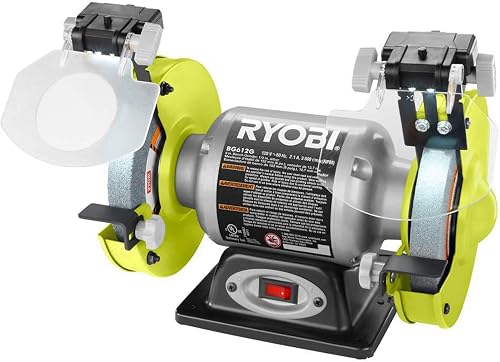 |  |  |
|---|---|---|---|---|---|---|---|---|---|---|
| Product | DEWALT DW756 | WEN BG625V | BUCKTOOL 6-Inch Grinder | JET JBG-6W | Metabo 6-Inch Grinder | Genesis GBG600L | WEN BG4260 | RYOBI 6-Inch Grinder | ATD Tools 10556 | Westward 1KEL8 |
| Brand | DEWALT | WEN | Bucktool | Jet | metabo | Genesis | WEN | RYOBI | ATD | Westward |
| Best for | Best Overall | Best for Variable Speed | Best for Sharpening | — | Best for Low Vibration | Best for High Speed | — | — | Best for Heavy Use | — |
| The listing says | 5/8 HP induction motor Cast iron base and housing | 2.5-amp motor, 2000 to 3400 RPM Flexible work light included | 1/3HP motor, 1750 RPM 60-grit and 80-grit wheels included | 1/2-HP motor, 3,450 RPM 36-grit wheel and crimped wire wheel | 370 W, 3.4 Amp 120V induction motor Adjustable eye shield and spark deflectors | 1/2-HP induction motor 3,550 RPM no-load speed | 2.1-amp motor, up to 3450 RPM 6-by-3/4-inch grinding wheels | LED bar graph voltage indicator Brightness scales with voltage proximity | 1/2 HP, 2.8 A, 120 Volt/60 Hz motor Shatter resistant eye shields and spark guards | Not stated |
| More information | Check Price on Amazon | Check Price on Amazon | Check Price on Amazon | Check Price on Amazon | Check Price on Amazon | Check Price on Amazon | Check Price on Amazon | Check Price on Amazon | Check Price on Amazon | Check Price on Amazon |
Head to Head on What Matters
Motor Power and Speed
The motor dictates how much pressure you can apply before the wheel slows down. Options like the DEWALT DW756 and JET JBG-6W offer 1/2 HP motors spinning at 3,450 RPM, which is suited for heavy-duty metal removal. In contrast, the BUCKTOOL 6-Inch Grinder provides a 1/3 HP motor at 1,750 RPM, prioritizing control over raw speed. The WEN BG625V offers a variable speed range from 2,000 to 3,400 RPM, giving you the most flexibility to switch between tasks.
Build Materials and Stability
Stability is crucial for safety and precision. The DEWALT DW756 and JET JBG-6W use cast iron bases and housings, which add significant weight to dampen vibrations. The BUCKTOOL 6-Inch Grinder and Metabo 6-Inch Grinder utilize cast aluminum bases with rubber feet to keep the unit steady during use. These materials are chosen to handle the torque generated by the motor without shifting on your workbench.
Included Safety and Utility Features
Almost all grinders here include adjustable eye shields and tool rests. The Genesis GBG600L stands out by including dual flexible lights for better visibility, while the WEN BG625V adds a single flexible light. The ATD Tools 10556 includes a cooling tray, which is a rare feature meant to help manage the temperature of the metal after grinding. Always ensure your workspace meets UL safety standards for power tools when setting up your station.
What the Numbers Mean for You
When you look at these grinders, the numbers tell a story about how your workflow will change. A 3,450 RPM motor is excellent for cleaning up rusty metal or deburring steel, but it’s often too fast for sharpening knives, as high heat can ruin the temper of the blade. If you’re mainly sharpening, a lower speed like the 1,750 RPM on the BUCKTOOL 6-Inch Grinder is far more forgiving.
Horsepower ratings like 1/2 HP versus 1/3 HP mainly determine how aggressive you can be. A 1/2 HP motor is harder to stall when you press a heavy piece of metal against the wheel. However, a bigger motor doesn’t make the grinder better for delicate tasks. If you’re a hobbyist, the extra power might just mean you have less control. Always look for the weight of the unit, as a heavier build generally means less vibration, making your work more comfortable over long sessions.
1. DEWALT 6 Inch Bench Grinder
Best for: Heavy-duty, high-speed material removal.
The DEWALT DW756 is a workhorse designed for those who need to remove material quickly. Its 1/2 HP motor and 3,450 RPM speed make it ideal for grinding down thick steel or shaping metal parts. The industrial cast iron base provides durability. However, this isn’t the right choice for someone looking to sharpen fine woodworking chisels, as the high speed and power make it easy to remove too much metal too fast.
Pros
- Powerful 5/8 HP induction motor.
- Sturdy industrial cast iron construction.
- The distance between the wheels is wide enough to accommodate larger workpieces comfortably.
Cons
- High speed may be too aggressive for delicate sharpening.
2. WEN BG625V 2.5-Amp 6-Inch Variable Speed Bench Grinder with Flexible
Best for: Versatile tasks requiring different speeds.
The WEN BG625V offers a variable speed motor ranging from 2,000 to 3,400 RPM. This range allows you to match the speed to the material. Use the lower end of the spectrum for delicate sharpening tasks to avoid overheating metal. Shift to the higher RPM settings when you need to remove rust or heavy material from old tools quickly.
The flexible work light is a practical addition that illuminates your workspace directly. This feature prevents shadows from obscuring your view during precision work. You also receive two different wheels: an 80-grit wheel for finishing and a 36-grit wheel for aggressive grinding.
If you’re reviving a collection of knives, bits, and rusted hardware, this unit provides the necessary control. However, this isn’t a high-torque machine built for industrial-level production. If you need to grind thick steel plate all day, the 2.5-amp motor may struggle.
Pros
- Variable speed motor for varied tasks.
- Includes a flexible work light.
- Comes with two different grit wheels.
- Backed by a two-year warranty.
Cons
- Variable components may require more maintenance than fixed-speed models.
3. BUCKTOOL 6″ 1/3HP Low Speed Bench Grinder
Best for: Precision sharpening and delicate metalwork.
The BUCKTOOL 6-Inch Grinder runs at a slow 1,750 RPM, which is perfect for keeping your tools cool while sharpening. The lower speed prevents the metal from overheating and losing its hardness, making it a favorite for woodworkers. The tool-free adjustable work rest makes it simple to get your angle right. This isn’t the tool for someone who needs to grind away large amounts of material quickly, as the 1/3 HP motor is optimized for precision rather than speed.
If you’re reshaping a dull edge or repairing a nicked blade, use the 60-grit Brown Aluminum Oxide wheel first. Switch to the 80-grit White Aluminum Oxide wheel for the final polish. Beginners often make the mistake of pressing too hard against the wheel. This creates unnecessary heat and ruins the temper of your steel. Instead, use light, consistent pressure to let the grit do the work.
The cast aluminum base features rubber feet to dampen vibration. If you feel the unit shifting during operation, ensure the base is bolted securely to your workbench. A loose mount will negate the stability provided by the heavy-duty housing. The included spark arrestor and transparent eye shield are essential safety features. Always adjust these shields before turning the power on to block flying debris.
Pros
- Low speed prevents overheating tools.
- Tool-free adjustable work rests.
- Stable cast aluminum base.
- Full 2-year warranty coverage.
Cons
- Slower material removal speed.
4. JET 6-Inch Bench Grinder w/ Wire Wheel
Best for: Professional shop environments.
The JET JBG-6W is built for demanding use with a 1/2 HP motor and heavy-duty cast iron guards. It includes a 36-grit vitrified aluminum oxide wheel and a crimped wire wheel. This dual setup is a fantastic addition for cleaning rust or paint off metal surfaces without needing to change tools. The totally enclosed, pre-lubricated ball bearings are designed for long life in a busy workshop.
Because of its weight and professional focus, it might be overkill for a casual hobbyist who only needs a grinder once a year. If you plan to use this for occasional light sharpening, the heavy-duty construction may occupy more space than your project justifies. However, if you’re tackling consistent metal restoration, the cast iron build provides the necessary stability to handle vibration during high-speed operation.
Always utilize the pre-drilled base to secure the unit to a stand or workbench. Attempting to operate this tool on an unanchored surface is a common mistake that compromises safety and precision. If the machine shifts during use, your work will suffer.
Pros
- Includes a useful wire wheel.
- Totally enclosed ball bearings.
- Heavy-duty cast iron construction.
- Adjustable eye shields and spark guards.
Cons
- Requires a permanent mounting spot due to weight.
- High 3,450 RPM speed may be aggressive for delicate materials.
5. Metabo 6-Inch Shop Bench Grinder
Best for: Users prioritizing build quality and low vibration.
The Metabo 6-Inch Grinder is built with a focus on smooth, quiet performance. Its 370 W motor is maintenance-free and features vibration-dampening feet that keep the unit from “walking” across your bench. It’s a solid, reliable choice for standard grinding tasks in any home shop. The trade-off is that it lacks some of the extra utility features like built-in lights found on other models, making it a “no-frills” performance machine.
Pros
- Maintenance-free induction motor.
- Vibration-dampening feet for stability.
- Three-year limited warranty.
Cons
- Lacks integrated work lights.
6. Genesis GBG600L 6″ Bench Grinder with Dual
Best for: Projects where visibility is the main challenge.
The Genesis GBG600L features two flexible gooseneck lights, which are excellent for illuminating both sides of the grinding wheels. This is a massive help if your shop workspace has poor overhead lighting. If you struggle to see the edge of your workpiece during fine detail work, the direct light prevents shadows from obscuring your progress.
With a 1/2 HP induction motor and 3,550 RPM, it has plenty of power for standard grinding and deburring. The induction design provides smooth, quiet operation compared to universal motors. This grinder may not be ideal for those who prefer a minimalist setup, as the lights attached to the guard area increase the overall footprint. If you’re working with large, awkward pieces, these lights may obstruct your movement. In that case, you should remove the light attachments to gain necessary clearance.
Pros
- Dual flexible lights improve visibility.
- High 3,550 RPM motor speed.
- Quiet, smooth performance.
Cons
- Lights may get in the way of large workpieces.
- Increased footprint due to light mounting.
7. WEN BG4260 2.1-Amp 6-Inch Single Speed Bench Grinder
Best for: Simple, straightforward grinding needs.
The WEN BG4260 is a classic single-speed grinder that gets the job done without any complicated settings. It’s a great choice for someone who wants a basic tool to keep in the corner for sharpening and cleaning bits.
The 2.1-amp motor spins the 6-by-3/4-inch wheels at a steady 3450 RPM. This speed is ideal for reviving old knives, drill bits, and small hand tools. If your project involves heavy-duty metal removal or continuous industrial work, this motor will likely stall. Reserve this unit for lighter home workshop tasks where precision and simplicity matter more than raw torque.
The package includes one 60-grit wheel for finishing and one 36-grit wheel for coarser material removal. Both wheels fit the standard arbor size required for this model. You should prioritize adjusting the pivoting tool rests and eye guards before every session to ensure your safety.
Pros
- Simple, easy-to-use design.
- The package comes with a pair of wheels featuring varying levels of coarseness for different tasks.
- Two-year warranty.
Cons
- Limited power for heavy-duty tasks.
If you’re a hobbyist needing a reliable, low-maintenance sharpener, this grinder is a solid fit. However, if you require variable speeds or high-capacity grinding, look for a more powerful machine. The extended warranty coverage provides reliable protection for standard home use.
8. RYOBI GIDDS2-3554576 6″ 2.1 Amp Grinder with Led Lights
Best for: Users who want voltage monitoring.
The RYOBI 6-Inch Grinder includes a unique LED bar graph that indicates the presence of voltage near the tool. This can be a useful safety feature when working in areas with hidden wiring. The system operates on a proximity basis: the closer you move the tool to a live voltage source, the more LEDs illuminate on the bar graph.
Use this feature to scan walls or surfaces before you begin grinding to avoid accidental contact with live electrical lines. If the LEDs remain dark, you’re likely clear of immediate electrical hazards. If the bar graph lights up, stop immediately and relocate your work area.
It also features a bright flashlight that can be used independently of the voltage detection function. This allows you to illuminate your workspace even when the tool is powered down. While these features are helpful, the grinder is best suited for light tasks. It doesn’t offer the heavy-duty power or mass of the professional-grade grinders on this list.
Pros
- Integrated LED voltage detector.
- Independent flashlight for the workspace.
- Compact design for smaller benches.
Cons
- Voltage detection is proximity-based rather than a direct circuit test.
9. ATD Tools 10556 6″ 1/2 HP Bench Grinder
Best for: Heavy-duty home shop use.
The ATD Tools 10556 balances power and utility with a 1/2 HP motor that reaches a no-load speed of 3,450 RPM. Its 2.8-amp draw makes it suitable for standard 120-volt shop outlets. You get a pair of wheels—one medium and one coarse grit—to handle everything from sharpening blades to heavy material removal.
The unit’s 21-pound weight demands a stable foundation. Use the pre-cast base holes to bolt the grinder directly to a dedicated stand or a heavy workbench. If you mount it to a flimsy surface, the vibrations will compromise your control and accuracy.
Safety features include adjustable, shatter-resistant eye shields and metal spark guards. A dust-proof switch prevents metallic debris from fouling the internal components, which extends the motor’s lifespan. The integrated cooling tray is essential for managing heat on small parts during prolonged grinding sessions.
The included flexible work light improves visibility, but remember that the bulb isn’t provided. If you need to swap wheels, ensure your replacements match the required diameter, face width, and bore specifications. This grinder is UL listed, providing assurance that the electrical build meets established safety standards for shop equipment.
Pros
- Includes a convenient cooling tray.
- Dust-proof switch protects the motor.
- UL listed for safety.
Cons
- Bulb for the work light isn’t included.
10. Westward 1KEL8 Bench Grinder
Best for: Industrial-grade performance.
The Westward 1KEL8 is a 1/3 HP model running at 3,450 RPM. It’s a no-nonsense grinder that provides standard performance for common shop tasks. Because the listing doesn’t specify extra features, it’s best for users who prefer a basic, durable machine that doesn’t have “extras” to break or replace.
If your workflow requires precision control over material removal rates, this fixed-speed unit will likely disappoint you. It isn’t the right choice for someone who specifically needs variable speeds or built-in lighting.
Choose this model if you need a dedicated tool for heavy-duty grinding where consistency matters more than versatility. If you find yourself needing to switch between delicate buffing and aggressive grinding, look for a model with adjustable speed settings instead.
Pros
- Reliable 3,450 RPM speed.
- Industrial-focused performance.
Cons
- No specialized features mentioned.
- Lacks variable speed control.
- No integrated lighting system.
JET Bench Grinder
The JET Bench Grinder (Model JBG-6) is a 1/4 HP alternative for those who need a lighter-duty tool. It maintains the same 3,450 RPM speed as its heavier cousins, making it perfect for light grinding or sharpening in a small workshop where space is limited.
If your work requires removing large amounts of material, choose a model with at least a 1/2 HP motor, such as the JET JBG-6W. These higher-power units are built with heavy-duty cast iron to handle demanding environments. For precision tasks like reshaping blades or fixing worn edges, prioritize a low-speed model. A 1,750 RPM grinder provides the control necessary for professional-quality results while minimizing the risk of overheating your metal. Always verify the base design before buying; models with pre-drilled holes ensure you can securely mount the tool to a workbench.
Grizzly Bench Grinder Work Light
The Grizzly Industrial T24463 is a 6-inch grinder designed to improve visibility during operation. Its integrated work light helps you see your project clearly, which is essential when reviving old tools, knives, or bits.
If your workspace lacks overhead lighting, a model with a flexible or dual-gooseneck light is a practical choice. Some units offer a single large light, while others use multiple lights to minimize shadows across the grinding surface. When selecting a grinder, check if the bulb is included, as some models require a separate purchase.
If you prioritize precision, ensure the tool rests are adjustable. This allows you to position work accurately against the wheel. Always use the included eye shields and spark guards, which are standard safety features designed to protect you from flying debris during operation.
Metabo Heavy Duty Bench Grinder
The Metabo DS 150 Plus is an upgraded, heavy-duty version of the standard Metabo grinder. It features a 3.6-amp motor and an integrated LED light, making it a great choice if you want the durability of the Metabo brand combined with the visibility of a built-in light.
This model reaches a no-load speed of 3,600 RPM. When choosing between this and the standard DS 150 M, prioritize the Plus model if your workspace lacks overhead lighting. The built-in LED significantly improves precision during detailed tasks. If you’re performing light maintenance, the standard 3.4-amp DS 150 M is sufficient. Always ensure your bench is stable, as the vibration-dampening rubber feet found on these units are designed to minimize movement during operation. If you notice excessive shaking, check that the tool rests are adjusted correctly to keep your workpiece steady.
Related guides
- Best 6 Inch Bench Grinder for Precision Sharpening and Durable Performance
- Variable Speed 7 Inch Angle Grinder: Ultimate Tool for Precision Cutting
- Bench Grinder for Sharpening Knives: Top Wet and Dry Systems Reviewed
Frequently Asked Questions
Is a higher RPM always better for a bench grinder?
No, a higher RPM isn’t always better. While 3,450 RPM is great for fast material removal, it can be too fast for sharpening tools like knives or chisels. High speeds generate more friction, which can overheat the metal and ruin its temper. If you plan on doing a lot of sharpening, a lower speed around 1,750 RPM is often better to keep your tools cool and sharp without damaging the metal.
What does the “HP” rating mean for my work?
The Horsepower (HP) rating indicates the motor’s ability to maintain its speed under load. A motor with higher horsepower is less likely to stall when you press a heavy piece of metal against the wheel compared to a lower-rated motor. If you’re doing heavy grinding on thick steel, a higher HP is helpful. If you’re only doing light sharpening or cleaning, a lower HP is perfectly sufficient and often easier to control.
How do I compare grinders with different wheel grits?
Choose a grit based on your specific material removal needs. A 36-grit wheel removes material quickly, while 60 or 80-grit wheels are better for smoothing and sharpening. Check the included wheels to ensure they match your primary tasks.
What should I look for in a grinder base?
A sturdy base is essential for safety and precision during operation. Look for a cast iron or heavy cast aluminum base that can be bolted to a workbench to absorb vibration. Always ensure the base has pre-drilled holes for secure mounting.
Conclusion
Once you’ve settled on a model, don’t forget to pick up a sturdy stand or mount it securely to your workbench. It’ll make your work much safer and more comfortable. You’re going to love how much easier your sharpening tasks become once you’ve got the right tool spinning in your shop.

Hi, this is Cynthia A. Rose. Welcome to my Grinder related blog. Usually, I am busy with my kitchen and cooking all day. My main desire is to create a new recipe every day. But I have to use new tools every day to create new recipes. In this blog, I will share you how to use kitchen tools properly. I will not just share cooking related equipment, I will try to review all kinds of grinders like angle grinder among you. I hope my 12 years of experience will come in handy. Thanks!