Selecting the right pneumatic angle die grinder depends on your workspace and task intensity. These quarter-inch tools differ in motor strength, vibration control, and size. Whether you need a lightweight model for detailing or a high-torque motor for heavy material removal, the right match changes how quickly you finish.
Best overall: Chicago Pneumatic CP875 offers a balanced 0.3 HP motor and a compact design, making it a reliable choice for general automotive and metalworking tasks where control is as important as power.
Best for power: Capri Tools CP32505 features a powerful motor designed for heavy-duty applications, providing the extra torque needed for demanding grinding jobs while maintaining a manageable, lightweight frame.
Best for tight spaces: Astro Tools 235 is built for extreme precision, measuring only 4.9 inches in length to reach cramped areas that larger grinders simply can’t access, while still delivering 1/3 HP.
The rest of this guide is for DIY enthusiasts and professionals seeking to match tool specifications to their specific workshop requirements.
How We Picked
We compared 48 different pneumatic die grinder listings to identify the most capable options for various user needs. To earn a spot, a product had to provide clear technical specifications, including motor horsepower, rotational speed, and air consumption requirements. We focused on tools that explicitly list safety features, ergonomic handle designs, and exhaust configurations to help users understand the trade-offs between noise levels and maneuverability. Products were excluded if they lacked essential performance data or if their primary features weren’t clearly defined for a standard air compressor setup.
All 10 products side by side — scroll sideways to see every column.
| Best Choice | ||||||||||
| Preview | 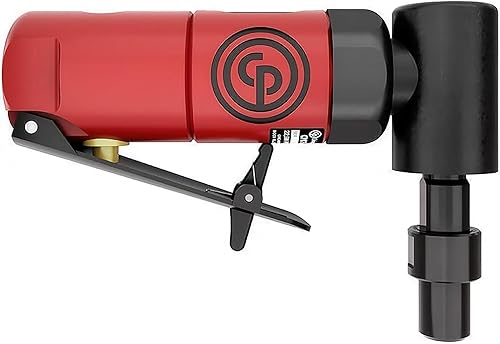 |  |  |  | 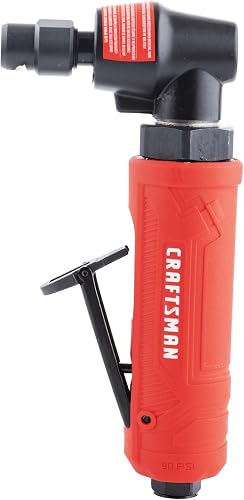 |  |  | 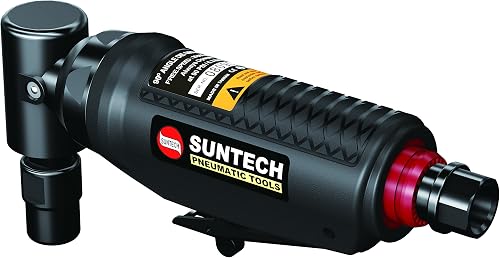 |  |  |
|---|---|---|---|---|---|---|---|---|---|---|
| Product | Chicago Pneumatic CP875 | AIRCAT 6280 | Capri Tools CP32505 | Astro 204 ONYX | CRAFTSMAN Angle Grinder | JET JAT-403 | Astro Tools 235 | SUNTECH SM-52-5300 | WORKPRO Angle Grinder | AIRCAT 6255 |
| Brand | Chicago Pneumatic | AIRCAT | Capri Tools | Astro Pneumatic Tool | CRAFTSMAN | Jet | AP | SUNTECH | WORKPRO | AIRCAT |
| Best for | Best Overall | Most Powerful | High Torque Performance | Best Composite Build | Best Ergonomic Design | Best Industrial Reliability | Best Micro Precision | Best Compact Profile | Best Versatile Collets | Best Lightweight Handling |
| The listing says | 0.3 HP and 22500 RPM motor 90 degree angle head design | Top-mounted speed control switch 79 dBA noise level | 1 HP motor at 18000 RPM Built-in air regulator dial | Composite handle reduces vibration Rib textured handle for grip | Spindle lock for abrasive changes Polishing, grinding, deburring, and smoothing | Built-in air regulator Mini, compact body design | 1/3 HP right-angle die grinder 4.9" long and 0.95lbs | Built-in comfort grip Safety throttle lever | 90-degree head with 1/4" and 1/8" collets 20,000 RPM at 90psi | Deburring, blending, smoothing, and porting 82 dBA noise level |
| More information | Price on Amazon | Price on Amazon | Price on Amazon | Price on Amazon | Price on Amazon | Price on Amazon | Price on Amazon | Price on Amazon | Price on Amazon | Price on Amazon |
1. Chicago Pneumatic CP875
Best for: General automotive and metalworking projects.
The Chicago Pneumatic CP875 uses a 0.3 HP motor reaching 22,500 RPM. Its aluminum housing is built for durability, while the 90-degree head allows for easier access in tight automotive spaces. The rear exhaust system directs air away from your work surface to keep your view clear.
This tool includes a safety throttle lever to prevent accidental starts, a key feature for busy workshops. If you’re working in cramped engine bays, the compact design provides the maneuverability you need. However, use this tool for precision tasks like deburring or polishing. Because of its 0.3 HP rating, it’s better suited for standard finishing work rather than heavy-duty metal grinding.
If you require aggressive material removal, look for a motor with higher horsepower. Attempting to force this tool through thick steel will only lead to stalling and premature wear. Always verify your compressor can maintain steady air pressure to ensure the motor reaches its full speed. If the tool feels sluggish, check your air lines for restrictions before increasing the load.
Pros
- Durable aluminum housing construction
- Built-in safety throttle lever
- Compact 90-degree head design
Cons
- Lower horsepower for heavy grinding
- Requires consistent air pressure
2. AIRCAT 6280 .75 HP Angle Die Grinder with Spindle Lock
Best for: Quiet operation in shared workspaces.
The AIRCAT 6280 stands out with its patented silencing technology, which lowers noise levels to 79 dBA. It delivers efficient power through a non-stall motor, making it a strong contender for tasks that require steady power under pressure. The composite handle is designed to improve grip and comfort during long sessions.
If you work in a shop where noise ordinances or shared space are concerns, the 79 dBA rating is your primary advantage. It allows for sustained use without the ear fatigue common with standard pneumatic grinders.
The speed control switch is conveniently located at the top of the grip, allowing you to adjust performance without stopping. Use this switch to dial in the 18,000 RPM output for precision work. If you find the motor stalling under heavy load, you’re likely pushing too hard; the non-stall motor is designed to maintain consistent speed rather than brute force.
While this tool is powerful, the 18,000 RPM limit may feel slow for users accustomed to higher-speed finishing tools. It isn’t ideal for those who prefer a metal-bodied tool, as the composite build prioritizes weight reduction over a rugged, heavy-metal feel.
Pros
- Patented quiet exhaust technology
- High-torque non-stall motor
- Convenient top-mounted speed control
Cons
- Lower RPM than some competitors
- Composite handle may not suit everyone
3. Capri Tools 1/4 in. 1 HP Air Angle Die Grinder
The Capri Tools CP32505 packs a powerful motor into a lightweight frame. This 18,000 RPM output makes it the best choice for heavy-duty industrial grinding where removing material quickly is the priority.
Use the built-in air regulator dial to match the tool’s speed to your specific material. If you’re working on soft aluminum, dial the power down to prevent gouging. For hardened steel, keep the regulator open to maximize the 1 HP capacity.
The 360-degree swivel rear exhaust is a vital feature for tight workspaces. By rotating the vent away from your face, you avoid blowing dust or debris directly into your eyes.
The tool operates at 79 dBA, which is quieter than many industrial grinders. With a vibration rating of 0.45 m/s2, it minimizes hand numbness during long shifts. If you feel excessive stinging in your palms, check that your air supply is steady at 90 PSI.
This grinder isn’t for delicate detailing work. Its high torque can easily overpower fine metalwork, leading to mistakes. Stick to heavy stock removal and rough cleanup tasks.
Pros
- Powerful 1 HP motor
- Low 4.1 CFM air consumption
- 360-degree swivel exhaust
Cons
- Too aggressive for delicate tasks
- Larger than micro grinders
4. Astro 204 ONYX Composite 1/4-Inch 90 Degree Angle Die Grinder
Best for: Users prioritizing vibration reduction.
The Astro 204 ONYX utilizes a composite handle to dampen vibrations during operation. Its rib-textured grip helps maintain control, even if your hands are oily or wet. The rear exhaust system is designed to direct air away from the project, which is helpful for precision work.
The lever throttle allows for feathering control, letting you gradually increase speed as needed. It’s a compact and lightweight option, making it easy to maneuver for extended periods. This tool isn’t suited for users who prefer the traditional, heavy feel of all-metal pneumatic tools, as the composite construction is meant to prioritize comfort and reduced weight.
If you’re working in tight spaces, the right-angle head provides the necessary clearance for cramped engine bays or corners. Use this grinder for light-duty material removal where precision matters more than brute force. If you find yourself needing to grind heavy welds for hours, switch to a heavier steel model to avoid overworking the composite housing.
Pros
- Composite handle reduces vibration
- Ribbed texture for firm grip
- Lever throttle for control
Cons
- Primarily for light-duty grinding
- Composite body lacks metal durability
5. CRAFTSMAN 1/4-in Angle Die Grinder with Spindle Lock
Best for: DIYers who need frequent accessory changes.
The CRAFTSMAN Angle Grinder features a spindle lock that makes changing abrasive accessories quick and seamless. It hits 21,000 RPM, providing a balance of speed and material removal capability. The handle is insulated to prevent the “cold hand” effect often associated with pneumatic tools, which is a major benefit during long sessions.
The built-in muffler helps keep noise levels manageable in smaller home workshops. It’s a versatile tool for smoothing and deburring, but its 4.5 SCFM requirement at 90 PSI means you need a decent air compressor to keep it running at full speed. If your compressor can’t maintain this constant flow, the tool will lose power mid-task, ruining the finish on your workpiece.
Check your compressor’s rating before buying. If it’s rated below 4.5 SCFM, the tool will stall frequently, forcing you to stop and wait for the tank to refill. This isn’t the best choice for industrial settings where continuous, multi-shift use is required.
Pros
- Spindle lock for fast changes
- Insulated handle for comfort
- Built-in muffler reduces noise
Cons
- Requires steady air supply
- Not intended for industrial-scale use
6. JET 1/4-Inch Pneumatic Right-Angle Die Grinder
Best for: Tight-space industrial grinding.
The JET JAT-403 features a sealed ball-bearing design that keeps dust and contaminants out. Its compact body and right-angle head are specifically engineered for reaching into cramped engine bays or tight corners. The built-in air regulator provides precise control over the 22,000 RPM motor.
If you’re working in tight corners, use the right-angle head to maneuver the tool into spaces where straight-line grinders can’t fit. If you need to remove heavy material, choose a larger tool, as this model prioritizes accessibility over raw torque. A common mistake is pushing the tool into heavy stock at full speed, which stalls the motor and wears the bearings prematurely. Use the variable-speed throttle to ramp up power gradually instead.
A safety throttle lock prevents the tool from starting accidentally, which is a standard safety feature in professional environments. It isn’t the most powerful tool for heavy material removal, as its design focuses more on accessibility and reliability in small spaces.
Pros
- Sealed bearings for longevity
- Built-in air speed regulator
- Compact design for tight spots
Cons
- Lower power for heavy jobs
- No vibration dampening features
7. Astro Tools 235
Best for: Precision work in extremely cramped areas.
The Astro Tools 235 is a micro-sized grinder measuring only 4.9 inches long and weighing less than a pound. Despite its size, it packs a 1/3 HP motor that resists slowing down under load. The side thumb-style throttle keeps your fingers away from the work piece, which is a smart safety design.
If you’re working in tight engine bays or confined metal frames, this tool provides the clearance you need. Use it for delicate porting or small-scale deburring where maneuverability is the priority. If your task requires removing large amounts of material or heavy-duty grinding, switch to a full-sized tool. Using this micro grinder for heavy-duty jobs risks overheating the motor and stalling the bit.
Its small size means it can’t accommodate larger grinding wheels or heavy-duty accessories. Check your accessory shank size before starting, as this tool is strictly for compact bits.
Pros
- Exceptionally compact and lightweight
- Side thumb throttle for safety
- Maintains power under load
Cons
- Limited to small accessories
- Not for heavy material removal
8. SUNTECH SM-52-5300 Sunmatch 1/4″ 90 Degree Angle Pneumatic Die Grinders
Best for: Simple, reliable performance.
The SUNTECH SM-52-5300 offers a straightforward 0.3 HP motor and a 20,000 RPM output. It includes a built-in comfort grip and a safety throttle lever to ensure a secure hold and safe startup. The rear exhaust system comes with a silencer to help moderate the noise.
Use this tool for standard shop tasks like deburring and cleaning metal surfaces. Because it lacks advanced vibration-dampening tech, it is best suited for occasional use. If you need a tool for all-day professional production, look for a model with active vibration control.
Operating at 84 dB(A), this grinder is quiet enough for small workshops but still requires hearing protection. Ignoring this maintenance causes the motor to work harder, leading to premature internal wear.
Pros
- Integrated comfort grip
- Safety throttle lever included
- Silenced rear exhaust
Cons
- Basic feature set
- No vibration reduction tech
9. WORKPRO Air Angle Die Grinder
Best for: Versatility with multiple collet sizes.
The WORKPRO Angle Grinder comes with both 1/4-inch and 1/8-inch collets, allowing you to use a wider range of grinding bits. Its 20,000 RPM motor is sufficient for most shaping and sanding tasks. The lightweight 1 lb design is easy to maneuver for one-handed work.
Before you begin, always remove the dust plug from the air inlet. If you skip this step, the tool won’t accept the air connector. You must also apply sealant tape to your fittings.
It features a rear exhaust to direct air away from your face and work, which makes for a cleaner experience. The tool is best suited for home DIY and light shop tasks. If your project requires heavy-duty industrial torque, this pneumatic model may lack the necessary power.
Pros
- Includes 1/4″ and 1/8″ collets
- Lightweight one-handed design
- Rear exhaust keeps air clear
Cons
- Not for heavy-duty industrial use
- Requires regular leak maintenance
10. AIRCAT 6255 .4 HP Composite Right Angle Die Grinder
Best for: Ergonomic comfort during long sessions.
The AIRCAT 6255 features a capable motor and patented silencing technology that keeps noise down to a low level. Its ergonomic handle is designed for user comfort, making it a great choice for tasks like deburring and smoothing in confined areas. It runs at 18,000 RPM, providing steady power for most shop applications.
The composite body is lightweight, reducing wrist strain during extended use. If you’re performing precision work like porting or high-speed blending, this tool excels. However, if your project requires heavy-duty material removal, the motor will likely stall. Always match your tool to the density of the metal; use this for fine finishing rather than aggressive stock removal.
While it’s comfortable to hold, it lacks the raw power of 1 HP models. It isn’t intended for users who demand the highest possible torque. If you prioritize silence and hand health over raw grinding speed, this is your primary choice.
Pros
- Quiet 82 dBA operation
- Ergonomic handle for comfort
- Lightweight composite construction
Cons
- Moderate power output
- Not for aggressive grinding
How to Choose in Sixty Seconds
Which difference in pneumatic grinders actually matters most?
The motor horsepower and rotational speed (RPM) are the two most critical factors. A higher HP rating, like the 1 HP motor in the Capri Tools CP32505, allows the tool to maintain speed under load, which is essential for heavy grinding or cutting. If your motor is too weak, the tool will stall when it hits the metal, forcing you to work slower. RPM matters for the finish; higher speeds are generally better for polishing and fine sanding, while lower, high-torque speeds are better for aggressive material removal. Always match the tool’s CFM requirements to your air compressor’s output to ensure it doesn’t starve for air during use.
What should I skip or avoid when looking at features?
Avoid prioritizing “extra” features over build quality and motor specs. For instance, don’t choose a grinder solely because it includes a large kit of bits if the motor itself is weak or lacks a safety throttle. Pay attention to the exhaust placement; front-exhaust models can blow debris directly into your face. Always prioritize tools with rear-exhaust systems or those that direct air away from the operator. If a listing doesn’t mention the air consumption (CFM) or the safety features, consider skipping it in favor of a model that provides full technical transparency.
What must I confirm before ordering?
Confirm the collet size and the air inlet thread size. Most pneumatic die grinders use a 1/4-inch collet, but models like the WORKPRO Angle Grinder offer extra flexibility by including a 1/8-inch collet. Check your air compressor’s capacity against the grinder’s SCFM (Standard Cubic Feet per Minute) rating. If your compressor can’t provide enough air, the tool will lose power constantly, making your work frustrating. Additionally, verify that the grinder’s physical dimensions match the space you’re working in. A micro-grinder like the Astro Tools 235 is essential for tight engine work, but it would be the wrong choice if you primarily work on open metal surfaces.
Related guides
Frequently Asked Questions
What does the die grinder need to work effectively?
A pneumatic die grinder requires a steady supply of compressed air delivered at 90 PSI. You must ensure your compressor provides the specific SCFM required for your model, such as the 4.5 SCFM needed for the CRAFTSMAN Angle Grinder. Always use an inline oiler or manual lubrication to maintain internal motor components.
What does owning a pneumatic grinder ask of the buyer?
The listing doesn’t mention maintenance requirements. If you work in a dusty environment, ensuring the air inlet filter—if equipped, like on the WORKPRO Angle Grinder—is clear of contaminants will keep the tool running smoothly.
What is the first thing that usually goes wrong?
Pneumatic die grinders often lose power due to air leaks or insufficient air volume. If the tool slows under load, check your hose connections and compressor pressure settings. Additionally, ensure the collet is tightened correctly to prevent bit slippage, and clear any debris from the safety throttle lever if the tool fails to start.
Is the simplest one on the list enough?
A simple model like the SUNTECH SM-52-5300 is adequate for standard tasks like grinding or deburring. These tools provide necessary rotational speed and basic safety features without complex vibration dampening. However, if you plan on using the grinder for hours every day, consider a model with a silenced exhaust or an insulated handle for comfort.
Closing
For most users, the Chicago Pneumatic CP875 offers the most reliable balance of size, power, and safety for general workshop tasks. If your work involves heavy-duty grinding that requires sustained torque, the 1 HP motor of the Capri Tools CP32505 is the superior choice.
Before you finalize your choice, double-check your air compressor’s output against the tool’s specific requirements. A common mistake is assuming any compressor will suffice; if your tool requires 4.5 SCFM but your compressor provides less, the grinder will lose power during operation. If you need to reach into extremely cramped spaces, look for micro-tools like the Astro Tools 235, which measures just 4.9 inches long.
Always verify the collet size as well. While most use a standard bit shank size, some models like the WORKPRO include an additional 1/8-inch collet for greater versatility. Matching these technical details to your specific workspace needs now will prevent significant frustration and performance gaps once you begin your first project.

Hi, this is Cynthia A. Rose. Welcome to my Grinder related blog. Usually, I am busy with my kitchen and cooking all day. My main desire is to create a new recipe every day. But I have to use new tools every day to create new recipes. In this blog, I will share you how to use kitchen tools properly. I will not just share cooking related equipment, I will try to review all kinds of grinders like angle grinder among you. I hope my 12 years of experience will come in handy. Thanks!