A hand held meat tenderizer improves meat preparation depending on whether you prefer a mechanical needle device for marinating or a traditional weighted mallet for flattening. Needle-style tools excel at breaking down connective tissue for better flavor absorption, while mallet-style tools are better for creating consistent, thin cutlets for quick cooking.
Best overall: Jaccard 45-Blade Tenderizer, as it offers a professional-grade design with 45 blades that significantly reduce cooking time and improve marinade penetration across a wide variety of meat types. Best for frequent use: Gourmet Easy 60-Needle Tenderizer, which provides the highest blade count in this group to maximize coverage per press and speed up your overall kitchen prep time. Best for versatility: OXO Good Grips Tenderizer, which features a dual-sided design that allows you to both tenderize tough proteins and flatten meat for uniform cooking in a single tool.
The rest of this guide is for home cooks looking to improve their meat texture or reduce cooking times through manual preparation.
How We Picked
We prioritized products that explicitly stated their maintenance requirements, such as dishwasher safety or special cleaning instructions, to ensure ease of use.
All 10 products side by side — scroll sideways to see every column.
| Top Pick | Best for Flattening | Best for Lightweight Use | Best for Heavy Duty | Best Needle Tenderizer | Best for Small Spaces | Best Rolling Tenderizer | Best for Soft Grip | |||
| Preview | 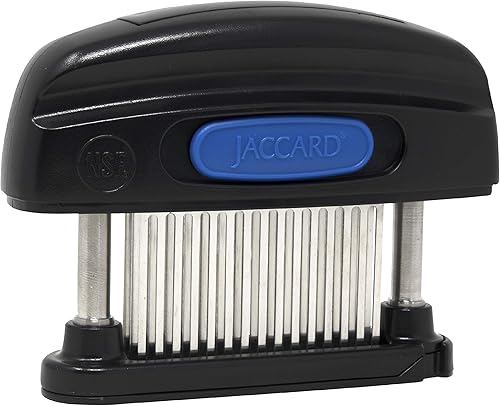 |  |  |  |  |  |  |  |  |  |
|---|---|---|---|---|---|---|---|---|---|---|
| Product | Jaccard 45-Blade Tenderizer | OXO Good Grips Tenderizer | KitchenAid Gourmet Tenderizer | Gourmet Easy 60-Needle Tenderizer | Stainless Steel 1.65LB Mallet | 48-Blade Needle Tenderizer | Jaccard 16-Blade Tenderizer | Handheld Rolling Tenderizer | Gorilla Grip Mallet | Round Meat Tenderizer Tool |
| Brand | Jaccard | OXO | Not stated | Gourmet Easy | SUCCFLY | LZONSTK | Jaccard | XIZHI | GORILLA GRIP | DIMROM |
| Best for | Top Pick | Best for Flattening | Best for Lightweight Use | — | Best for Heavy Duty | Best Needle Tenderizer | Best for Small Spaces | Best Rolling Tenderizer | Best for Soft Grip | — |
| The listing says | Reduces cooking time by up to 40% Increases marinade absorption by up to 600% | Two-in-one tool for pounding and tenderizing Pyramid-shaped teeth for tenderizing | Textured face for tenderizing meat fibers Smooth face for flattening meat | Solid one-piece design 60 ultra-sharp stainless steel needles | SUS 304 stainless steel construction 1.6LB weight with extended handle | Reduces cooking times up to 40% 48 stainless steel blades | Reduces cooking time by up to 40% Double sided razor-sharp stainless-steel knives | 7.2 inches long with 1.8-inch roller Raw wood handle and stainless steel roller | Dual sided aluminum alloy head 9.6 ounce durable construction | 56 fine blade points Works on ribeye, turkey, duck, pork |
| More information | Check Latest Price on Amazon | Check Latest Price on Amazon | Check Latest Price on Amazon | Check Latest Price on Amazon | Check Latest Price on Amazon | Check Latest Price on Amazon | Check Latest Price on Amazon | Check Latest Price on Amazon | Check Latest Price on Amazon | Check Latest Price on Amazon |
1. Jaccard 45-Blade Meat Tenderizer
Best for: Professional chefs and serious home cooking enthusiasts.
This tool uses 45 razor-sharp stainless steel blades to cut through connective tissue, which helps reduce your cooking time by up to 40%. By creating these pathways, it allows marinades to be absorbed up to 600% more effectively than untreated meat. While the Jaccard 16-Blade Tenderizer is more compact, this model provides significantly more blade coverage for larger cuts.
The device is designed for durability and performance, backed by a lifetime warranty against material and workmanship defects. It’s an ideal choice for anyone working with various meats, including beef, pork, and chicken, to ensure juicy results. This tenderizer isn’t for those who prefer a single, heavy tool that can also perform tasks like crushing ice or nuts.
The effectiveness of this tool lies in its ability to transform tougher cuts of meat. Because the blades are double-sided and razor-sharp, they slice through the fibers that typically cause toughness without needing to pound the meat flat. This preserves the natural structure of the protein, which helps the meat retain its juices and flavors during the cooking process.
You’ll find this model particularly useful for boneless chicken breasts. Whether you’re preparing venison, fowl, or standard beef, the consistent blade density provides a level of precision that manual mallets can’t match.
Pros
- Lifetime warranty against defects
- Reduces cooking time significantly
- Professional-grade stainless steel blades
Cons
- Not for multi-purpose kitchen tasks
- Requires careful handling of blades
2. OXO Good Grips Meat Tenderizer
Best for: Cooks who need to flatten and soften tough cuts of meat.
This tool offers a two-in-one design featuring a textured side for tenderizing and a smooth side for flattening. The head weight and angle are specifically optimized to help you flatten meat quickly and efficiently, even when your hands are wet. Unlike the Gourmet Easy 60-Needle Tenderizer, this mallet provides a physical pounding action rather than needle piercing.
The textured side uses pyramid-shaped teeth to break down tough muscle fibers. This process physically alters the meat’s structure to ensure it cooks more evenly. Meanwhile, the smooth side maximizes surface area to flatten cuts like chicken breasts or pork cutlets to a uniform thickness. This consistency is vital for preventing thin edges from drying out while the center remains raw.
The handle features a soft, non-slip grip that prioritizes comfort and safety during repetitive tasks. It’s made from BPA-free ABS plastic with a solid steel core, making it durable for daily use. Because the core is steel, the tool carries enough heft to do the work for you without requiring excessive force.
This tool isn’t for those looking to infuse marinades deep into the center of thick steaks, as it doesn’t use blades. Instead, it relies on mechanical force to soften the protein. Because it’s dishwasher safe, you can sanitize it easily after handling raw proteins.
Pros
- Comfortable non-slip handle
- Dishwasher safe for cleaning
- Dual-sided for versatile use
Cons
- Lacks a piercing mechanism for breaking down fibers.
- Heavier than needle tools
3. KitchenAid Gourmet Tenderizer
Best for: Home cooks who prefer a lightweight mallet.
This aluminum mallet provides a strong, durable surface for preparing a variety of meats. One side features rows of raised points designed to break down tough fibers. This texture helps prepare the meat for cooking while making the surface more receptive to marinades.
The opposite side is smooth, which is ideal for pounding and flattening meat into thin cutlets. You should use this flat face whenever you need to reduce the thickness of a protein before it hits the pan. Because it’s made of lightweight aluminum, the tool is easy to handle during repetitive tasks. It can even double as a utility tool for smashing nuts, peppercorns, shellfish, or hard candy.
The ergonomic handle includes a hole for hanging storage, keeping your workspace organized and the tool accessible. You must wash this tool by hand with warm water and mild detergent. Dry it immediately after use to maintain its condition. This model isn’t for those who want a dishwasher-safe tool, as its aluminum construction requires manual cleaning.
Pros
- Convenient hanging storage hole
- Lightweight aluminum construction
- Versatile for non-meat tasks
Cons
- Requires hand-washing only
- No blade-based penetration
4. Gourmet Easy Meat Tenderizer Tool with 60 Stainless Steel Sharp
Best for: Users needing the fastest preparation possible.
With 60 ultra-sharp needles, this tool covers more surface area per press than standard 48-needle designs. This high density allows you to process larger cuts of meat in fewer motions, significantly speeding up your kitchen prep. It’s a solid, one-piece unit that arrives ready to use without any assembly required. It’s an excellent choice for those who want consistent results on steak, pork, and chicken every time they cook.
The stainless steel handle is ergonomically designed to deliver even pressure while keeping your grip secure. Because the needles penetrate deeply, they create pathways that allow marinades to reach the center of the meat faster. This improves flavor absorption and ensures your final dish is tender and juicy.
It’s rust-resistant and backed by a 5-year warranty, making it a reliable addition to your kitchen. This manual tool isn’t for those who want a device that also serves as a meat pounder or hammer. If your goal is to flatten or thin out a cut of meat, you’ll need a mallet instead.
Pros
- High density of piercing blades
- Dishwasher safe maintenance
- Five-year product warranty
Cons
- Single-function needle design
- Can’t flatten meat
5. Stainless Steel 1.65LB Mallet
Best for: Heavy-duty flattening and crushing tasks.
This mallet weighs 1.65 pounds, providing substantial weight to make flattening meat a breeze. Made from SUS 304 stainless steel, it’s virtually unbreakable and designed to be corrosion-resistant. Its balanced head and extended handle help reduce the physical effort required during long meal preparation sessions.
The dual-sided head serves two distinct culinary purposes. Use the textured side to loosen tough muscle fibers in steak or chicken, which helps your favorite marinades and seasonings penetrate deeper for a better taste. Flip to the flat side to create a uniform thickness, ensuring your proteins cook evenly across the entire surface.
Beyond tenderizing, this multi-purpose tool is effective for cracking crab claws, smashing garlic, or even crushing ice for drinks. It’s dishwasher safe, ensuring that cleanup remains simple even after working with raw meat. This tool isn’t for those who prefer a lightweight or compact device that takes up minimal drawer space. Because it’s built from solid steel, it’s a permanent fixture for your kitchen that comes with a 5-year warranty.
Pros
- Heavy-duty stainless steel build
- Multi-purpose kitchen utility
- Dishwasher safe design
Cons
- Quite heavy for some users
- No blade-based tenderizing
6. 48-Blade Needle Tenderizer
Best for: Infusing flavor into thick cuts.
This tool features 48 stainless steel blades that create tiny heat channels to help marinades penetrate deep into your food. These channels allow seasonings to reach the center of the cut, which can lower your total cooking time by up to 40%. It’s designed to maintain the original shape and appearance of the meat while significantly increasing tenderness.
The tool uses a protective cover that automatically retracts the needles when not in use, ensuring safety. The ABS grip is ergonomically designed to be comfortable even during frequent use. Because the blades are sharpened on both sides, they remain effective even after repeated sessions in the kitchen.
After cooking, you can clean it in the dishwasher or with the provided brush in soapy water. Once dry, the transparent cover keeps the needles isolated for safe storage. This tool isn’t for those who want a mallet-style tenderizer for physically pounding meat into thinner shapes. It performs best on boneless cuts like pork loin, steak, or chicken breast.
Pros
- Safety cover for storage
- Ergonomic grip design
- Dishwasher safe components
Cons
- Can’t flatten meat
- Requires careful cleaning
7. Jaccard 16-Blade Meat Tenderizer
Best for: Those with limited storage space.
This is the original, compact version of the Jaccard tenderizer, offering 16 razor-sharp stainless steel blades. It’s perfect for professional chefs and home enthusiasts who want to reduce cooking times by up to 40%. It works on a variety of proteins, including venison and fowl, by cutting through connective tissue.
Its small footprint makes it easy to store in any kitchen drawer. Like its larger counterparts, it significantly improves marinade absorption, helping you get better results from tougher cuts of meat. This tenderizer isn’t for those who need to tenderize large, thick roasts in a single press.
Pros
- Very compact storage size
- Reduces cooking time
- Proven blade-based design
Cons
- Fewer blades than larger models
- Not for flattening meat
8. Handheld Rolling Tenderizer
Best for: Quick, rolling surface preparation.
This rolling tool features a stainless steel roller that pierces the meat surface with a simple push. It’s an efficient way to help marinades penetrate while keeping the meat’s appearance intact. The handle is made of raw wood, which provides a natural grip, and it includes a hole for convenient hanging storage.
The roller measures 1.8 inches, while the overall tool length reaches 7.2 inches. This compact size makes it ideal for maneuvering over smaller cuts of steak, chicken, or pork. Because the blades only pierce the surface, you can tenderize your protein without flattening it or changing its original shape. This makes it an excellent choice if you want to improve texture while maintaining the integrity of a thick-cut steak.
It’s durable and rust-proof, designed to handle tasks with various meats. Because it’s dishwasher safe, cleanup is straightforward after you finish your meal prep. However, this tool isn’t for those who prefer the deep, internal penetration offered by a multi-needle press tenderizer. If you need to break down tough connective tissue deep within a roast, a blade-based press remains the superior choice.
Pros
- Simple rolling operation
- Easy to store and clean
- Durable stainless steel roller
Cons
- Less deep penetration than needles
- Wood handle requires care
9. GORILLA GRIP Dual-Sided Meat Tenderizer Mallet
Best for: Comfort and ease of cleaning.
This 9.6-ounce mallet features a dual-sided aluminum alloy head that’s both powerful and rust-resistant. The patented soft-touch rubber handle provides excellent slip resistance, making it easy to handle even when you’re busy in the kitchen. It’s designed to be an ideal weight that maximizes your force without causing fatigue.
You can use the flat side for pounding and the textured side for breaking down tough proteins. Because the tool is BPA-free and dishwasher safe, sanitation after raw meat prep is effortless. The durable construction ensures the head won’t bend or break during heavy use.
Beyond standard meat preparation, the flat surface is versatile enough to crush garlic, ginger, or even mash potatoes. This allows you to use a single tool for multiple stages of your recipe. It’s an ideal choice for those who prefer the tactile control of a mallet over the automated feel of a needle-based system.
Pros
- Slip-resistant rubber handle
- Dishwasher safe construction
- Comfortable ergonomic weight
Cons
- No needle-based penetration
- Aluminum alloy may dent
10. Round Meat Tenderizer Tool
Best for: Precise control and safety.
This tool uses 56 sharp stainless steel needles to create tiny channels through every cut. These channels allow marinades and seasonings to penetrate deep into the meat, reaching far beyond the surface for a richer, more even flavor profile.
A unique feature is the twist-lock control. A counterclockwise turn locks the blades securely, keeping your fingers away from the exposed needles when the tool isn’t in use. A clockwise turn quickly unlocks it, making the transition to meal prep seamless. It’s designed to press evenly through thick cuts, supporting consistent results during frequent use in busy kitchens.
This tenderizer is effective for a wide range of proteins, including ribeye, turkey, duck, and pork. It’s specifically built to soften tougher cuts, making everyday meals easier to prepare and more enjoyable to serve. Note that this tool is designed for piercing, not for physically pounding or flattening meat into thin cutlets.
The unit is dishwasher safe, which simplifies the cleanup process after cooking. The included specialized brush is essential for removing trapped meat from between the needles, ensuring the tool stays hygienic for the next use.
Pros
- Secure twist-lock safety feature
- Includes cleaning brush
- High 56-needle count
Cons
- Not for flattening meat
- Requires cleaning between needles
How to Choose the Best Hand Held Meat Tenderizer
Mallet vs. Needle
The most important choice is between a mallet and a needle tenderizer. Mallets are best for flattening meat into thin, uniform cutlets, which is essential for recipes like schnitzel or chicken piccata. They rely on physical force to break down fibers.
Needle tenderizers, such as those from Jaccard or Gourmet Easy, are superior for infusing marinades deep into the meat without changing its shape or appearance. By creating tiny heat channels, these tools allow seasonings to reach beyond the surface, increasing marinade absorption by up to 600%. If your goal is to make tougher cuts more tender and flavorful, choose a needle tool. If you need to prepare thin, evenly-cooked cutlets quickly, a mallet is the correct choice.
Blade and Needle Count
If you decide on a piercing-style tool, the number of blades matters for efficiency. A higher blade count, like the 60 needles on the Gourmet Easy 60-Needle Tenderizer, allows you to cover more surface area with fewer presses, which speeds up prep. However, more needles can sometimes make the tool slightly more difficult to clean.
If you prefer easier maintenance, a model with fewer blades or one that includes a specialized cleaning brush, like the Round Meat Tenderizer Tool, is a better fit. Always check if the model features a protective cover or a locking mechanism. These safety features are vital for keeping fingers away from sharp points during storage and ensuring the blades remain isolated when the tool isn’t in use.
Material and Weight
Construction materials directly affect the durability and cleaning process of your tenderizer. Stainless steel models, such as the 1.65LB SUCCFLY mallet, are generally the most durable and resistant to rust. Aluminum mallets are lightweight and effective, but you must confirm if they’re dishwasher safe, as some require hand-washing to prevent damage or oxidation.
For mallets, consider the weight carefully. A heavier mallet requires less physical effort to flatten meat but might be tiring to use for long periods. A lighter tool, like the 9.6-ounce Gorilla Grip mallet, maximizes force without wearing you out. Choose a weight that feels balanced and comfortable in your hand to ensure you can control the tool safely during use. Always prioritize models with ergonomic, non-slip grips, which provide safety and comfort even when your hands are wet during food preparation.
Closing
For most home kitchens, the Jaccard 45-Blade Tenderizer remains the top choice for its professional-grade performance and ability to significantly enhance marinade absorption. If you require a more versatile tool that can also flatten meat for consistent cooking, the OXO Good Grips Tenderizer is an excellent alternative that provides reliable results with an ergonomic design.
To get the best performance from your new tool, ensure you follow the cleaning instructions provided in the listing. This is especially vital for needle-based models, where meat particles can accumulate between the blades. Many of these tools are dishwasher safe, but using a dedicated brush can help remove trapped debris more effectively.
Always store your tenderizer in a safe place. Utilize built-in locking guards, such as the twist-lock mechanism found on some needle models, or take advantage of hanging storage holes to keep sharp components away from other kitchen items. By maintaining your tool with consistent cleaning and secure storage, you ensure it remains a durable, high-performing asset for your meal preparation for years to come.
Related guides
- Top 10 Best Meat Tenderizer | Get Your Hands on the Right Tenderizer
- How to Tenderizers Work on Meat? A Step by Step Guide for Beginners
- Best Meat Grinder For Hunters

Hi, this is Cynthia A. Rose. Welcome to my Grinder related blog. Usually, I am busy with my kitchen and cooking all day. My main desire is to create a new recipe every day. But I have to use new tools every day to create new recipes. In this blog, I will share you how to use kitchen tools properly. I will not just share cooking related equipment, I will try to review all kinds of grinders like angle grinder among you. I hope my 12 years of experience will come in handy. Thanks!