
Choosing the right grinder depends on whether you need raw power for heavy metal work or a compact tool for tight spaces. The main differences lie in motor strength, power source, and safety features like paddle switches versus lock-on triggers. This guide helps you navigate these choices based on your specific workload.
Best overall: DEWALT D28499X Angle Grinder, which offers a 5.3 HP motor and overload protection to maintain high speeds while you grind through tough metal applications. Best for heavy duty: DEWALT DCG460B Angle Grinder, a cordless option that provides high-voltage performance for users who need to move freely around a job site without a cord. Best for precision: SHALL Variable Speed Grinder, which allows you to adjust speeds for different tasks like polishing or cutting, making it highly versatile for home workshops.
This guide is for anyone looking to match a professional or DIY tool to their specific grinding needs.
How We Picked
To earn a spot, a product had to clearly state its motor amperage or horsepower, its safety features, and the included accessories. We focused on tools that provide transparent technical specifications and clear ergonomic benefits. Products that lacked basic motor power data or safety information were excluded to ensure only reliable, well-documented options were included.
All 10 products side by side — scroll sideways to see every column.
| Top Pick | Best for Debris Protection | Also Great | Best for Heavy Duty | Best for Beginners | Best for Tight Spaces | |||||
| Preview |  |  | 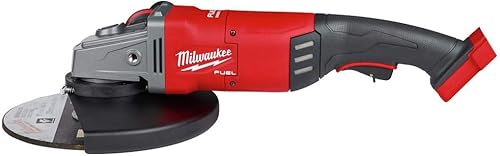 |  |  |  | 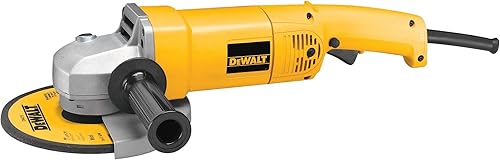 | 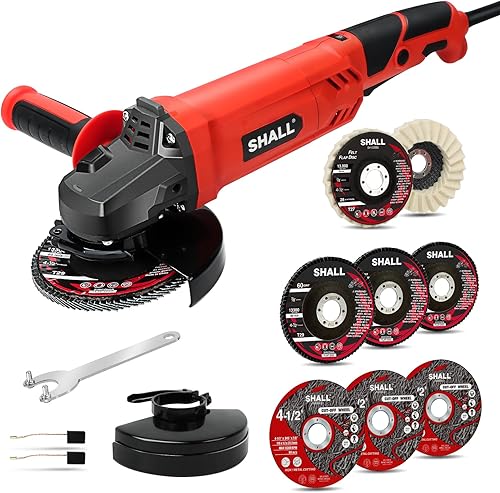 | 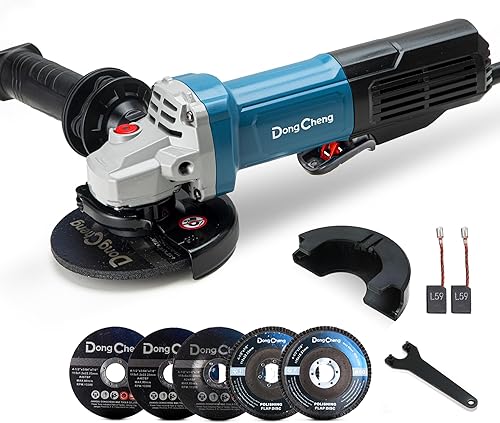 |  |
|---|---|---|---|---|---|---|---|---|---|---|
| Product | DEWALT D28499X Angle Grinder | Makita GA9020 Angle Grinder | Milwaukee 2785-20 M18 FUEL | DEWALT DCG460B Angle Grinder | Metabo W 2200-230 Grinder | Makita GA9080 Angle Grinder | DEWALT DW840 Angle Grinder | SHALL Variable Speed Grinder | DongCheng Angle Grinder | DEWALT Angle Grinder DWE4120 |
| Brand | DEWALT | Makita | Milwaukee | DEWALT | metabo | Makita | DEWALT | SHALL | Dong Cheng | DEWALT |
| Best for | Best Overall | Best for Debris Protection | Also Great | Best for Heavy Duty | — | — | — | — | Best for Beginners | Best for Tight Spaces |
| The listing says | 5.3 HP motor with 6,000 rpm Rotating rear handle for ergonomics | Spiral bevel gears Labyrinth construction debris protection | 15 Amp corded power equivalent Tool free accessories and guard | 60-Vol MAX 7 in.-9 in. angle grinder | 3 position side handle Metabo safety switch | 15.0 AMP motor with 6,600 RPM Soft start feature | 13 Amp motor with 8,000 RPM Tool-free keyless spark guard | 7.5 Amps, 900 W, 12000 RPM 4-1/2 inch, 7/8” arbor, 5/8”-11 spindle | 9.2 Amp motor with 11800 RPM 4.2 lbs weight with shockproof handle | 9 amp, 12,000 RPM motor High-efficiency low temp motor |
| More information | Check Price on Amazon | Check Price on Amazon | Check Price on Amazon | Check Price on Amazon | Check Price on Amazon | Check Price on Amazon | Check Price on Amazon | Check Price on Amazon | Check Price on Amazon | Check Price on Amazon |
1. DEWALT D28499X Angle Grinder
Best for: Heavy-duty metal fabrication and grinding.
The DEWALT D28499X is built with a high-power 5.3 HP motor designed to keep working under heavy loads. Its 6,000 RPM speed is optimized for 9-inch wheels, which helps you remove material quickly. The rotating rear handle and 5-position side handle allow you to adjust the tool for better comfort during long sessions.
The low-profile gear case is a major help when you need to reach into tight corners. If you’re working in confined spaces, prioritize this low-profile design over standard models to avoid gear case obstructions. However, this is a large, powerful tool that may be too heavy for someone looking for a light, daily-use grinder. It’s designed for demanding jobs, not small craft projects.
The tool includes automatic turn-off brushes. These shut down the motor when the brushes reach their wear limit, preventing catastrophic internal damage. If the tool stops suddenly during a project, check the brushes before assuming a motor failure. Epoxy coating on the field and armature further guards against abrasion from airborne metal debris.
Pros
- Powerful 5.3 HP motor.
- Rotating rear handle for ergonomics.
- Overload protection for motor life.
- Tool-free guard adjustments.
Cons
- Large size limits portability.
- Heavy for extended overhead use.
2. Makita GA9020 9″ Angle Grinder
Best for: Professionals needing an efficient, durable tool.
The Makita GA9020 uses spiral bevel gears to make the rotation feel smoother and more efficient. By minimizing friction, these gears ensure a more effective transfer of energy during heavy-duty grinding tasks.
Its labyrinth construction is designed to keep dust and debris away from the motor, bearings, and gears. If you work in environments with high particulate levels, this feature is vital for extending the tool’s functional lifespan. Similarly, the zig-zag varnish serves as a secondary defense, shielding the armature coil from abrasive dust that would otherwise cause premature motor failure.
The AC/DC switch makes it versatile for different power sources on site. If you’re operating from a generator rather than a wall outlet, this switch ensures the tool remains compatible.
The large rubber tool rest protects your work surface when you set the tool down. While this protects your material, remember that this grinder lacks the tool-free guard adjustments found on newer models. Expect to keep a screwdriver handy for adjustments. This is a choice for those who prioritize mechanical longevity over the convenience of quick-change components.
Pros
- Labyrinth construction protects the motor.
- Smooth spiral bevel gears.
- Versatile AC/DC switch.
Cons
- Lacks tool-free guard adjustments.
- No soft-start feature mentioned.
3. Milwaukee 2785-20 M18 FUEL 7 in. / 9 in. Large
Best for: Users who want corded power without the cord.
The Milwaukee 2785-20 M18 FUEL delivers the same power you expect from a 15-amp corded grinder but in a cordless package. It features a brushless motor that reaches 6,600 RPM, maintaining speed even when you’re pushing hard into the material. The tool-free adjustments for both the guard and accessories make it very fast to switch tasks.
If you’re working in a shop with constant access to outlets, a corded tool provides consistent, uninterrupted power. However, if your work takes you to remote sites or requires mobility across large structures, the M18 system removes the drag of extension cords.
The dual-action trigger is a smart safety addition, as it prevents the tool from starting by accident. This feature is vital when you’re wearing thick work gloves that might otherwise bump a standard switch.
Because it runs on batteries, you must have the appropriate M18 system components ready to go. This tool is designed for users who already own Milwaukee battery gear. If you lack the batteries, you will need to purchase the necessary power system separately to operate the tool.
Pros
- Powerful cordless performance.
- Tool-free guard and accessory changes.
- Brushless motor for efficiency.
- Metal housing and gearing for durability.
Cons
- Requires battery system investment.
- Heavier than standard corded units.
4. DEWALT 60-Vol MAX Cordless 7 in.-9 in. Large Angle Grinder
Best for: Heavy-duty cordless grinding tasks.
The DEWALT DCG460B is part of the 60-Volt MAX line, designed to handle large 7 to 9-inch discs without needing a power outlet. It’s a tool-only model, meaning you provide your own batteries. It’s built specifically for users who need significant power in a cordless format.
Because it’s a specialized, high-voltage tool, it isn’t the right choice for small, delicate tasks. It’s intended for heavy-duty material removal where power is the priority over maneuverability.
Pros
- Cordless 60-volt power.
- Accepts large grinding discs.
- Reliable DEWALT build quality.
Cons
- Sold as tool only.
- Large footprint for smaller tasks.
5. Metabo W 2200-230 Grinder
Best for: Industrial-grade professional applications.
The Metabo W 2200-230 is German-engineered to prioritize safety and durability. It features a 15-amp motor that spins at 6,600 RPM, providing steady power for long work days. The paddle switch includes a safety design to prevent the tool from starting accidentally.
The 3-position side handle allows you to rotate the grip to fit the angle you’re working on. If you’re grinding in tight corners, rotate the handle to the side to maintain control. If you’re performing long horizontal cuts, keep the handle on top for better downward pressure.
This grinder is a heavy-duty machine meant for professionals, so it may feel like overkill for a casual DIY enthusiast. It’s designed to be a workhorse on the job site. If your project requires continuous, high-torque material removal, this 15-amp motor won’t bog down. If you’re only doing light metal cleaning, the weight of this unit will likely cause unnecessary fatigue.
Pros
- Durable German-engineered build.
- Safety paddle switch included.
- Strong 15-amp motor.
Cons
- Heavy for casual use.
- No soft-start feature listed.
6. Makita GA9080 9″ Angle Grinder
Best for: Comfort during long-duration grinding.
The Makita GA9080 stands out for its ergonomics, featuring a rotatable back handle that lets you work in different orientations comfortably. The 15-amp motor provides 6,600 RPM for fast material removal. It also includes a soft-start feature, which suppresses the start-up reaction. This prevents the tool from jerking when you first pull the trigger, which protects the gears and extends the overall life of the tool.
The vibration-absorbing side handle is a major benefit if you spend all day grinding. You can adjust this handle into three distinct positions to suit your grip. While the tool-less wheel guard allows for convenient adjustments on the fly, remember this is a large, powerful grinder. Use this model for heavy-duty material removal rather than light, handheld chores. If you require precision or a compact frame for tight spaces, this tool will be too cumbersome to handle effectively.
Pros
- Rotatable back handle for comfort.
- Soft-start for smooth operation.
- Vibration-absorbing handle included.
Cons
- Large, heavy design.
- Not for precision or small tasks.
7. DEWALT DW840 Angle Grinder
Best for: Mid-size grinding and cutting jobs.
The DEWALT DW840 is a 7-inch grinder with a 13-amp motor that hits 8,000 RPM. It offers a high power-to-weight ratio, making it easier to handle than 9-inch giants. The keyless guard makes it simple to redirect sparks away from you, and the spindle lock makes changing wheels fast.
If you work primarily with metal or masonry, the sealed bearings ensure a longer tool life under heavy duty conditions. You can run this tool off AC or DC power, which provides versatility across different job sites.
The external brush caps mean you can service the motor yourself without taking the whole tool apart. This is a very capable tool for tough materials, but it lacks the variable speed settings found on smaller, more versatile grinders.
If you need to swap discs frequently, the spindle lock allows for single-wrench changes. However, avoid this model if your work requires the precision of 4-1/2 inch discs, as it’s built specifically for the 7-inch class.
Pros
- High power-to-weight ratio.
- Tool-free keyless guard.
- Easy field-serviceable brushes.
Cons
- Fixed speed only.
- Not for small 4-1/2 inch discs.
8. SHALL Angle Grinder Tool 7.5Amp 4-1/2 Inch
Best for: Versatility across many different projects.
The SHALL Variable Speed Grinder uses a 6-speed dial to shift between 3,000 and 12,000 RPM. This range allows you to repurpose the tool for polishing and buffing delicate surfaces, rather than just cutting or grinding metal. At 4 pounds, the narrow body prevents the fatigue that often sets in during prolonged tasks.
You should use the lower speed settings for polishing or buffing to avoid burning through your material. Reserve the maximum 12,000 RPM setting for aggressive cutting or grinding tasks.
The 7.5-amp motor provides 900 watts of power. While this is sufficient for home workshops and DIY projects, it lacks the torque of heavy-duty industrial grinders. Rely on this tool for intermittent maintenance and small-scale fabrication. If you attempt heavy-duty steel fabrication, the motor will struggle under the load.
Pros
- 6 variable speed settings.
- Lightweight 4-pound body.
- Includes guards, cutting wheels, and flap discs.
Cons
- Lower amperage than professional models.
- Not intended for high-volume industrial steel fabrication.
9. DongCheng Angle Grinder 4-1/2 inch
Best for: Beginners and home renovation projects.
The DongCheng Angle Grinder uses a 9.2-amp copper motor to deliver 11,800 RPM. It has a slim 59mm body and weighs just 4.2 lbs, making it very comfortable to hold for extended periods. The paddle switch is a nice safety feature, as it shuts off immediately if you lose your grip.
If you’re performing precision metal cutting, rust removal, or weld cleaning, use the two-position handle to stabilize the tool. This reduces vibration and prevents hand fatigue during long projects. When switching between cutting and grinding, rotate the guard without tools to save time.
This tool is compatible with standard 5/8″-11 spindle accessories. If your task requires heavy-duty steel fabrication, this 9.2-amp motor may struggle compared to high-output industrial models. Use this grinder for DIY tasks, surface finishing, and light workshop fabrication where portability matters more than raw power.
The tool-free 360-degree guard is easy to adjust for different cutting angles. It’s a great all-around tool for home use. It’s best suited for DIYers and light workshop tasks.
Pros
- Slim, ergonomic body design.
- Safe no-lock paddle switch.
- Tool-free guard adjustment.
Cons
- Moderate motor power.
- Not for heavy-duty steel fabrication.
10. DEWALT Angle Grinder DWE4120
Best for: Compact work in tight spaces.
The DEWALT DWE4120 features a 9-amp motor that reaches 12,000 RPM. Its low-profile jam-pot gear case is specifically designed to fit into tight spots where larger grinders can’t go. The one-touch guard rotates 360 degrees with a single action, and the quick-change wheel release means you don’t need a wrench to swap discs.
This is a comfortable grinder for extended use due to its slim, ergonomic body. The 9-amp AC/DC motor is built for high overload protection and low operating temperatures. If you’re working in cramped corners, the low-profile head allows for better access. However, if you’re clearing massive amounts of stock, choose a larger model. This tool is optimized for 4-1/2 inch accessories on a 5/8-inch 11 spindle thread.
Many users make the mistake of forcing this tool into heavy-duty grinding tasks it wasn’t meant for. This leads to premature motor strain. Use this unit for precision work and tight-clearance applications. It’s a precision tool, not a substitute for a large-diameter heavy-material-removal grinder.
Pros
- Slim body for comfort.
- Quick-change wheel release.
- Low-profile gear case.
Cons
- Limited to 4-1/2 inch discs.
- Lower power than large grinders.
How to Choose in Sixty Seconds
Which motor size is right for my work?
If you’re cutting thick steel or cleaning large welds, you need a high-output industrial motor. These grinders are heavier but handle the load without stalling. For DIY, home repairs, or light metal cleanup, a 7-to-9-amp motor is usually enough. These are lighter and easier to control for long periods. Always check the Occupational Safety and Health Administration guidelines for safe operation of handheld power tools to ensure you’re using the right protective gear for your specific motor size. Remember that higher amperage usually means more heat and weight. Choose the smallest motor that still provides the power you need for your specific project.
Do I really need variable speed?
Variable speed is essential if you plan to do more than just cut or grind metal. If you want to polish stone, buff wood, or sharpen delicate blades, you need lower RPMs to avoid burning the material. If your goal is general-purpose DIY, a variable-speed grinder like the SHALL model is better. If your goal is purely heavy-duty fabrication, stick to a high-speed, single-speed professional model.
What should I check before I buy?
Always confirm the spindle thread size. Most US-spec grinders use a 5/8-inch-11 spindle, which lets you swap accessories between brands. Check if the tool comes with a guard and a handle, as these are critical for safety. Look for “tool-free” features if you change discs often; they save a lot of time. Finally, check the switch type. A paddle switch is safer because it shuts off when you let go, while a lock-on switch is better for long, continuous grinding sessions. Buying a tool that matches your specific grip preference and safety needs is just as important as the motor power.
The DEWALT D28499X remains the top choice for those who need heavy-duty power and reliability, while the SHALL Variable Speed Grinder is the standout for DIYers who need versatility across different materials. Both tools offer clear advantages depending on the intensity of your work. Before making your final decision, look at your primary tasks: if you’re cutting thick metal, go with the high-output DEWALT or Makita models. If you’re doing light home maintenance or polishing, choose a smaller, lighter tool. Once you select the model that fits your needs, ensure you have the correct safety gear, such as eye and ear protection, to keep your workspace safe during every project.
Frequently Asked Questions
Does the simplest grinder on the list do enough?
Yes, simple models like the DEWALT DWE4120 are sufficient for most household tasks and light metalwork. These grinders feature slim, easy-to-handle designs that prioritize control for DIY projects over raw industrial power. Note that these compact units are best suited for home renovation, rust removal, or cutting pipes.
What maintenance does a grinder need after purchase?
You should keep the vents clean and check the carbon brushes periodically to maintain your grinder. Most professional-grade tools feature external brush caps for easy access, and you should use compressed air to clear motor vents after heavy use. Regular cleaning is essential to prevent overheating and extend motor life.
What is the first thing that usually goes wrong?
The most common point of failure on an angle grinder is the motor brushes, which wear down over time. Many modern grinders include automatic shut-off brushes that protect the motor by stopping the tool when the brushes become too short. Always check these brushes first if your tool stops running suddenly.
Can I use these grinders with different attachments?
Yes, most grinders on this list use a standard 5/8-inch-11 spindle thread, allowing you to attach a wide variety of wheels and discs. This compatibility lets you easily swap between diamond blades, flap discs, and cut-off wheels. Always verify that the accessory’s RPM rating matches or exceeds the grinder’s speed.
Conclusion
Finding the perfect tool doesn’t have to be a headache once you’ve identified your primary tasks. Take a moment to look at your current project list and decide which size feels most comfortable in your grip. You’ll be ready to get to work and finish your next job with confidence.

Hi, this is Cynthia A. Rose. Welcome to my Grinder related blog. Usually, I am busy with my kitchen and cooking all day. My main desire is to create a new recipe every day. But I have to use new tools every day to create new recipes. In this blog, I will share you how to use kitchen tools properly. I will not just share cooking related equipment, I will try to review all kinds of grinders like angle grinder among you. I hope my 12 years of experience will come in handy. Thanks!