
Finding the right angle grinder concrete blade is about matching the tool to the task, with the best options featuring high-quality diamond matrices to handle heat. A solid blade prevents glazing and dust buildup, allowing the tool to cut efficiently through masonry without excessive force.
All 10 products side by side — scroll sideways to see every column.
| Top Pick | Best for Smooth Finishes | Best for Hard Materials | Best for Crack Repair | Best for Less Chipping | Best for Heavy Masonry | Best for Metal Cutting | Best for Wet Cutting | Best for Grinding | ||
| Preview |  |  |  | 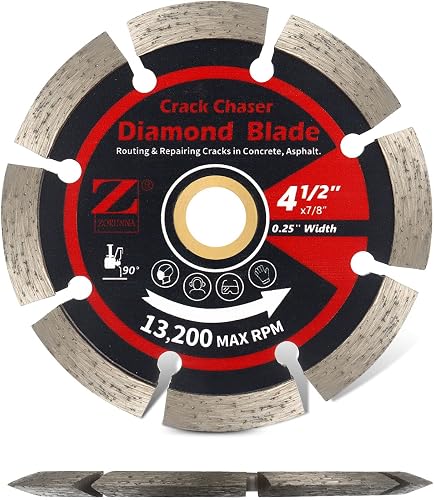 |  |  |  |  |  | 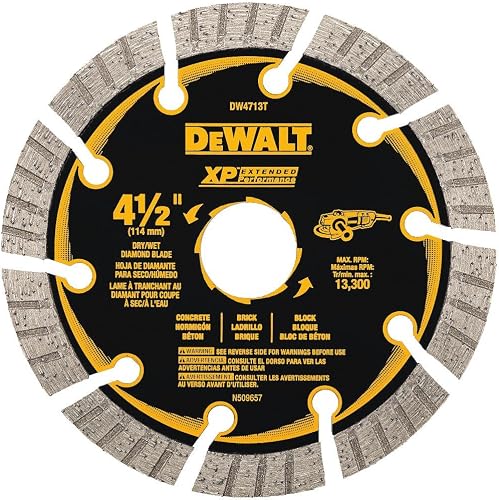 |
|---|---|---|---|---|---|---|---|---|---|---|
| Product | DeWalt Masonry Diamond Blade | Makita General Purpose Blade | EZARC Segmented Diamond Blade | Diamond Crack Chaser Blade | FOXBC Segmented Diamond Blade | Concrete Diamond Blade Set | Diamond Saw Cutting Disc | FEWELL Diamond Concrete Blade | Concrete Turbo Grinding Wheel | DEWALT Diamond Turbo Blade |
| Brand | DEWALT | Makita | EZARC | ZORUNNA | FOXBC | ZORUNNA | BURMONG | FEWELL | HRLORKC | DEWALT |
| Best for | Best Overall | Best for Smooth Finishes | Best for Hard Materials | Best for Crack Repair | Best for Less Chipping | Best for Heavy Masonry | Best for Metal Cutting | Best for Wet Cutting | Best for Grinding | — |
| The listing says | Diamond matrix provides 200x's longer life Thinner kerf increases speed and reduces dust | 13mm segments for longer life Up to 4x longer life | Cuts granite, concrete, sandstone, limestone 30% faster cutting speed | Concrete crack repair and chasing 4.5 inch diameter for angle grinders | 4-1/2 inch blade, 0.07" kerf, 13,280 RPM For concrete, rebar, brick, stone, block | 1/4" segment width, 7/8"-5/8" arbor Diamond segments for extended blade life | 4.5" blade for multiple materials Diamond grit for fast, smooth cuts | 4.5" diameter, 2.0 mm thickness, 10 mm height For wet and dry cutting materials | Large segments with heat treated design 4 Inch wheel with 12 segments | Even distribution for faster cutting Premium diamonds for longer life |
| More information | Price on Amazon | Price on Amazon | Price on Amazon | Price on Amazon | Price on Amazon | Price on Amazon | Price on Amazon | Price on Amazon | Price on Amazon | Price on Amazon |
1. DeWalt Masonry Diamond Blade
Best for: General masonry work requiring a thin, fast cut.
This blade uses a high-performance diamond matrix that’s meant to last much longer than standard abrasives. Its thinner kerf is the standout feature here, as it helps the blade move through material quickly while creating less dust in your workspace.
The continuous rim design is the secret to its performance. Unlike segmented blades that can chip edges, this smooth edge allows for a steady, constant contact with the material. This results in a cleaner finish that requires less cleanup once the cut is complete.
Using this blade is straightforward, but you should keep in mind that its focus on thinness means it isn’t built for heavy-duty demolition of thick concrete. It works best for clean, controlled cuts where precision matters more than brute force. If you’re a professional looking for a heavy-duty breaker, this might not be the primary tool for your kit. Instead, rely on it for finish work where you need to avoid unsightly fractures in the masonry.
Snapshot:
- Designed for dry cutting.
- Features a continuous rim.
- Includes a 7/8-inch arbor.
- Optimized for 4-1/2-inch grinders.
- Focuses on material removal speed.
- Thinner profile reduces debris.
2. Makita B-69711 5″ Diamond Blade
Best for: Users needing a smoother finish on tough materials.
This blade features 13mm segments, which are significantly taller than many others, designed to provide a longer life and faster cutting speed. The turbo design is its main draw, as it aims to deliver a cut that’s up to 30% smoother than standard segmented blades.
Owning this means you get a versatile tool for concrete, pavers, and roof tiles. However, because it’s tuned for a smoother cut, it may not be the fastest option if your main goal is simply tearing through massive blocks as quickly as possible. It is designed for those who need a clean edge on finished surfaces.
Who it fits: Those who prioritize a clean, smooth finish on visible masonry or pavers. It’s ideal for contractors who need to move between concrete and brick without swapping discs.
Who should pass: Users who are strictly doing rough, rapid demolition work where the finish quality doesn’t matter.
3. EZARC 4-1/2 Inch Segmented Diamond Blade
Best for: Aggressive cutting of hard masonry materials.
This blade uses a segmented design to increase cutting speed by 30% compared to standard discs. The gaps between the segments are crucial, as they allow for efficient debris removal and better airflow to dissipate heat during long sessions.
You’ll find this blade handles granite, concrete, and limestone quite well. It’s a solid choice for DIY enthusiasts, but if you’re working with extremely delicate tile that chips easily, the aggressive nature of these segments might cause more fraying than you want. It’s a tool built for speed and performance in tough environments.
What goes smoothly:
- Fast cutting through hard materials.
- Effective heat dissipation via gaps.
- Good debris removal during use.
- Versatile for various masonry types.
- Compatible with most hand-held grinders.
What you have to accept:
- Can be aggressive on delicate edges.
- Requires steady hands for clean lines.
4. Diamond Crack Chaser Blade
Best for: Precise concrete crack repair and sealing prep.
This is a specialized tool with a 1/4-inch wide V-groove design. Unlike standard cutting blades, this one is shaped specifically to widen and clean out cracks in concrete or asphalt to prepare them for sealant. The V-shape allows you to create a clean, uniform channel that ensures your repair material bonds properly to the surrounding surface.
You should know that this is a niche product; it isn’t meant for general cutting or slicing through bricks. The listing doesn’t mention how this blade performs for standard masonry cuts. It’s a one-trick pony, but it does that one trick very well for maintenance work.
Because it features a compact 4.5-inch diameter, it’s designed for maneuverability on flat surfaces rather than deep demolition. The 7/8-inch non-threaded arbor ensures it fits most standard angle grinders, but you must confirm your tool’s spindle size before starting. If your grinder requires a threaded connection, this blade won’t seat securely. Always verify your equipment specifications to ensure this professional-grade diamond construction performs safely on your specific repair project.
| Feature | Trade-off |
|---|---|
| 1/4-inch V-groove width | Not for general cutting |
| 4.5-inch compact diameter | Limited to shallow depth |
| Universal 7/8-inch arbor | Needs specific grinder fit |
5. FOXBC 4-1/2 Inch Segmented Diamond Blade
Best for: Demanding masonry applications requiring durable, consistent performance.
The optimized diamond distribution ensures constant exposure to the cutting surface, which helps maintain speed throughout the life of the disc.
Because these come in a three-pack, they’re great for projects where you might wear through blades quickly. The segmented rim design specifically reduces chipping, allowing for cleaner finishes even when cutting through dense materials like cinder block.
However, the listing notes that they’re engineered for demanding masonry, so if you’re only doing light hobby work, you might find the durability to be more than you actually need. They’re built for consistent, heavy-duty use. The 0.07″ kerf is designed for consistent cutting in demanding masonry applications, and the included bushings ensure compatibility across various angle grinder setups.
Snapshot:
- Includes three blades per pack.
- Dry and wet cutting compatible.
- Includes bushings for various arbors.
- Designed for rebar-reinforced concrete.
- High-speed cutting performance.
- 13,280 max RPM rating.
6. 3Pcs 4.5″ Concrete Diamond Blade
Best for: Heavy masonry projects where you need backup blades.
This set is built for versatility, handling concrete, brick, and block with a 1/4-inch segment width. Having three blades in one set is a major convenience for continuous work where you don’t want to stop and head to the store if one wears down.
The trade-off here is that these are designed for heavy applications, so they aren’t the best choice for intricate or decorative work. They’re workhorses, not artists. If you have a large backyard project involving a lot of pavers and blocks, this set will get you through the bulk of the labor.
Who it fits: Contractors or serious DIYers who have a large-scale project planned. It’s perfect for those who want to avoid downtime during a long weekend of work.
Who should pass: Someone who only needs to make a single cut on a tile or a small piece of stone.
7. Diamond Saw Cutting Disc
Best for: Multi-material cutting including metal and stone.
This disc stands out because it’s designed to cut through almost everything, including tile, marble, metal, and steel bars. Its serrated turbo design helps reduce vibration and makes for cleaner edges compared to standard abrasive wheels. Because it uses ultra-hard diamond grit rather than traditional abrasive materials, the blade maintains its shape and performance through repeated use.
While it’s marketed as a “cut it all” blade, you should treat it with respect, especially with metal. The listing explicitly warns that it isn’t recommended for steel thicker than 1/4 inch. If you push this blade beyond its limits, you risk damaging the diamond edge prematurely. The high-strength steel core and cooling holes are built for durability, but they can’t overcome the physical limitations of the diamond-reinforced edge when cutting heavy-duty materials.
What goes smoothly:
- Handles metal and stone equally.
- Reduced vibration during operation.
- Serrated design aids in cooling.
- Works with wet or dry saws.
- Professional-grade wear resistance.
What you have to accept:
- Limit on steel thickness.
- Not for wood or glass.
8. FEWELL 4 1/2 Inch Diamond Concrete Saw Blade
Best for: General purpose masonry cutting on a budget.
This blade features nine segments and a 10mm segment height, designed to balance cutting speed with service life. The gaps between the segments are clearly intended to clear out dust and debris, which prevents the blade from getting clogged. By facilitating this debris removal, the blade maintains its integrity throughout long sessions of cutting concrete, brick, block, or stone.
The inclusion of a 7/8-inch to 5/8-inch adapter makes this very compatible with most standard grinders found in home workshops. Because it’s constructed with high-concentration diamonds and high-strength steel, it handles both wet and dry applications without requiring specialized equipment.
The main drawback is that it’s a standard segmented blade, so it may produce more vibration or rougher edges compared to the turbo-style blades in this list. It’s a reliable, no-nonsense tool for basic masonry where speed and debris management matter more than a polished finish.
| Feature | Trade-off |
|---|---|
| Segmented design | Rougher edge finish |
| 10mm segment height | Average lifespan |
| Includes adapter | Adds assembly time |
9. Concrete Turbo Grinding Wheel
Best for: Smoothing and leveling concrete surfaces.
This is a cup-style wheel, which means it’s for grinding down high spots and smoothing out surfaces rather than cutting through them. The 12 large segments are heat-treated to handle the friction of grinding concrete or rock. This design prioritizes material removal over precision slicing, allowing you to flatten uneven slabs or remove excess mortar quickly.
Because this is a cup wheel, it isn’t a blade. You can’t use this to slice through a brick. If you buy this expecting to make clean cuts, you’ll be disappointed. It’s strictly for surface preparation and finishing work. You can use it wet or dry, which provides flexibility depending on your dust control needs or the hardness of the stone you’re working on.
Snapshot:
- 4-inch cup design.
- 12 heavy-duty segments.
- Designed for surface leveling.
- Effective on marble and rock.
- Dry or wet operation.
- Simple installation process.
10. DEWALT Diamond Turbo Blade
Best for: Fast cutting on masonry and concrete.
This turbo blade uses an even distribution of diamonds to ensure that the cutting surface stays consistent. It’s designed for those who want speed and a longer life than a standard segmented blade can offer. The high bond matrix works with the premium diamonds to maintain the integrity of the edge through repeated use.
The turbo design is excellent for general masonry, but it isn’t as aggressive as a wide-gap segmented blade. The listing doesn’t mention how this blade performs on soft, abrasive materials. It’s best used for harder materials like cured concrete or stone where the consistent contact point prevents chipping.
Who it fits: Users who need a reliable, fast-cutting blade for standard masonry tasks. It’s a good choice for those who trust the brand for consistent performance. The 4-1/2 inch diameter is specifically optimized for standard grinders, ensuring a balance between maneuverability and cutting depth.
Who should pass: Users who primarily cut soft, crumbly masonry where a deep-gap blade would perform better at clearing debris. If your project involves high-volume dust production, look for a blade with larger gullets.
The Decision Filter
Start by asking yourself if you’re cutting through material or grinding down a surface. If you’re cutting, you need a blade; if you’re leveling a floor or smoothing stone, you need a cup wheel.
Most people miss this: the difference between a segmented blade and a turbo blade is the quality of the edge finish. A segmented blade uses gaps to promote airflow and debris removal, making it ideal for aggressive, fast cuts in masonry. A turbo blade, by contrast, uses a continuous or serrated rim to deliver a smoother, cleaner result with less vibration.
If you’re cutting metal, you must ensure the blade is specifically rated for it. Most concrete blades are engineered for masonry and will fail instantly when faced with steel. Finally, always verify your grinder’s arbor size before buying. While many blades include bushings to adapt to different spindles, a mismatched fit is a significant safety risk that prevents the tool from operating at its intended speed.
The Thirty-Second Checklist
- Will you be cutting thick concrete, or just light stone and brick? Segmented blades excel at aggressive material removal for masonry, while turbo designs offer smoother finishes.
- Do you need a smooth, finished edge, or is rough speed enough? Turbo blades reduce vibration and create cleaner edges, whereas segmented gaps prioritize cooling and debris removal.
- Does your angle grinder match the standard arbor size required for your specific blade? Most blades include bushings or adapters, but confirming your tool’s fitment prevents unnecessary vibration or mounting issues.
- Are you planning to cut metal or rebar alongside your masonry work? While many diamond blades handle concrete and brick, specialized multi-purpose discs are required for steel or metal components.
- Will you be using the blade for dry cutting or a wet-saw setup? Check that your chosen disc is rated for your specific method to avoid overheating.
- Do you have the proper personal protective equipment to manage dust? Diamond cutting generates significant debris, making respiratory protection and eye safety essential for every session.
Three Regrets Worth Avoiding
Regret #1: Buying a blade that’s too thin or small for the depth of your material. Many users try to push a 4.5-inch blade through concrete that’s too thick, causing the blade to overheat and warp. Always verify the maximum cutting depth of your tool and match it to your project. Remember that segmented designs rely on gaps to dissipate heat; if you bury the blade too deep, you lose the airflow needed to prevent thermal damage to the steel core.
Regret #2: Ignoring the arbor size and needing to hunt for an adapter at the last minute. Most blades come with specific bushings or adapters to accommodate various spindles, but double-checking your grinder’s fitment before you start saves a trip to the store. Always ensure the blade is seated properly before tightening the nut to avoid dangerous wobbling or uneven wear during high-speed operation.
Regret #3: Failing to manage the dust created during dry cutting. Concrete dust is incredibly fine and harmful if inhaled, yet many beginners cut without a vacuum shroud or water feed. Always use a dust collection system or wet-cutting method to keep your workspace safe. Efficient debris removal also prevents the blade from clogging, which maintains your cutting speed and protects the diamond matrix from premature wear.
What to Look for in a Concrete Angle Grinder Blade
| If you want… | Look for | Avoid |
|---|---|---|
| Clean, smooth cuts | Turbo rim design | Segmented wide gaps |
| Maximum speed | Deep segmented gaps | Continuous smooth rims |
| Surface leveling | Cup grinding wheel | Flat cutting blades |
| Multi-material use | Reinforced steel core | Single-use cheap blades |
When you’re stuck between two blades that seem identical, look at the segment height. A taller segment generally means the blade will last longer, which is a simple tie-breaker for long-term projects. If you’re still unsure, check the maximum RPM rating against your grinder’s specs to ensure a safe match. Once you have made your choice, ensure your grinder is unplugged while you install the new blade, and keep the wrench stored in a place where you can find it next time.
Frequently Asked Questions
Can I use these blades for wet cutting?
Most listed blades support both dry and wet cutting, but always check the manufacturer’s markings. Wet cutting is preferred for concrete because it cools the blade and reduces airborne dust. Ensure your tool is rated for moisture if you choose to cut wet.
How do I know when the blade is worn out?
A blade is worn out when the diamond segments are flush with the steel core. At this point, the blade stops cutting efficiently and may vibrate excessively. Replace the disc immediately to avoid damaging the core or causing a safety hazard.
Can I cut metal with a concrete blade?
You can only cut metal if the blade is specifically marketed as a multi-purpose or metal-cutting diamond blade. Standard concrete blades are designed for the hardness of masonry and will often glaze over or lose their diamond grit immediately if used on steel. Always look for a “multi-purpose” or “metal” rating on the blade to ensure it can handle the different friction and heat levels metal creates.
What is the purpose of the gaps between segments?
The gaps between the segments on a diamond blade serve two critical functions: cooling and debris removal. As the blade spins, air rushes through these gaps to dissipate the intense heat generated by friction, while the space allows the dust and particles created by the cut to be cleared away from the cutting path. Without these gaps, the blade would overheat, lose its bond, and stop cutting effectively.
Is it safe to use a 4.5-inch blade on a 5-inch grinder?
You can use a smaller blade on a larger grinder if the arbor size matches, but never exceed the tool’s maximum diameter rating. Smaller blades wear out faster due to less surface area. Always prioritize the manufacturer’s safety rating for your specific tool.
Conclusion
Once you’ve finished your project, take a moment to inspect the edge for any missing segments or cracks. If it looks worn down, don’t hesitate to swap it out before your next job. Keeping your gear in good shape ensures you’ll stay safe and get the best results every time.

Hi, this is Cynthia A. Rose. Welcome to my Grinder related blog. Usually, I am busy with my kitchen and cooking all day. My main desire is to create a new recipe every day. But I have to use new tools every day to create new recipes. In this blog, I will share you how to use kitchen tools properly. I will not just share cooking related equipment, I will try to review all kinds of grinders like angle grinder among you. I hope my 12 years of experience will come in handy. Thanks!