Finding the right milwaukee small angle grinder depends on how you power your work and the physical space you face. While some models focus on raw corded power for heavy grinding, others prioritize cordless freedom or specialized flathead designs for tight corners. The primary difference between these units is the motor type and the specific safety features like braking systems or variable speed control. Choosing between a tool-only model and a full kit often dictates your start-up needs, but the core performance remains consistent across the M18 line.
All 9 products side by side — scroll sideways to see every column.
| Top Pick | Best for Refurbished | Best Brushless Grinder | Best for Tight Spaces | Best for Gloved Use | Best for Continuous Power | ||||
| Preview |  |  | 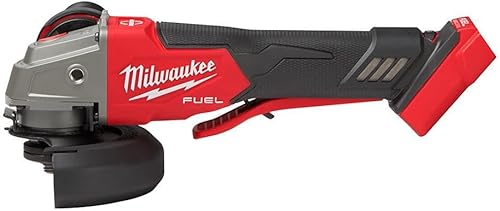 |  |  | 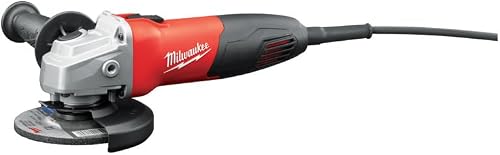 |  |  |  |
|---|---|---|---|---|---|---|---|---|---|
| Product | Milwaukee M18 Fuel 2880-20 | Milwaukee M18 Fuel 2980-20 | Milwaukee M18 Fuel 2888-20 | Milwaukee M18 Fuel 2981-20 | Milwaukee M18 2680-20 | Milwaukee 6130-33 | Milwaukee 6142-31 | Milwaukee M18 2780-20 | Milwaukee M18 2783-20 |
| Brand | Milwaukee | Milwaukee | Milwaukee | Milwaukee | Milwaukee | Milwaukee | Milwaukee | Milwaukee | Milwaukee |
| Best for | Best Overall | Best for Refurbished | Best Brushless Grinder | Best for Tight Spaces | Best for Gloved Use | — | Best for Continuous Power | — | — |
| The listing says | Electronic clutch for kickback protection Overload protection for motor life | Tested and certified refurbished Includes all relevant accessories | M18 FUEL 18V brushless 4-1/2 in./5 in. grinder | Generates 11A corded power Access to tight spaces | Paddle switch for gloved use Debris baffles prevent internal clogging | Manufactured in China 4-1/2" wheel diameter | Sold on Amazon | 18 Volts DC Includes spanner wrench, grinder, wheel guard | Manufactured in China Metal material |
| More information | Check Price on Amazon | Check Price on Amazon | Check Price on Amazon | Check Price on Amazon | Check Price on Amazon | Check Price on Amazon | Check Price on Amazon | Check Price on Amazon | Check Price on Amazon |
Head to Head on What Matters
Power Delivery and Motor Type
The Milwaukee 6130-33 stands out as a dedicated corded option, offering 7.0 Amps and a consistent 11,000 RPM. This tool relies on a 120V AC connection, providing steady, uninterrupted power for long-duration tasks in a shop environment. In contrast, the cordless options like the M18 Fuel 2880-20 use brushless motors to mimic the performance of corded tools without the tether.
The M18 Fuel 2981-20 specifically claims to generate 11A corded power, bridging the gap between battery convenience and high-demand performance. Meanwhile, the standard M18 2680-20 utilizes a 4-pole motor design to deliver maximum power during heavy cutting or grinding. These distinctions are vital if you work exclusively in shops with power access or need to move freely across large job sites. Brushless technology in the Fuel line also helps maximize motor life, ensuring the tool maintains its power output.
Safety and Control Features
Safety features define the higher-end cordless models. The M18 Fuel 2880-20 includes an electronic clutch for kickback protection, which is essential for preventing sudden tool movement if a wheel binds. The M18 Fuel 2981-20 utilizes a RAPIDSTOP brake to halt most wheels in less than 2 seconds, significantly reducing the time a spinning disc remains a hazard.
For general protection, the M18 2680-20 and the corded 6130-33 both feature overload protection to prevent damage to the motor and battery during abusive situations. The 2680-20 also uses an L-shaped debris baffle system to keep dust from clogging internal components. Additionally, the paddle switch design found on models like the 2680-20 and 2880-20 allows you to activate the tool easily, even when you’re wearing thick work gloves.
Physical Design and Access
The M18 Fuel 2981-20 features a low-profile, flathead design. This is purpose-built for reaching into tight spaces where a traditional 5-inch grinder head simply can’t fit. Most other models, such as the 6130-33, use a traditional profile that’s better suited for general surface grinding where clearance isn’t an issue.
Ergonomics play a major role in how these tools handle. The 2680-20 includes a 3-position side handle to provide maximum stability during operation. Furthermore, many of these grinders, including the 6130-33 and 2680-20, incorporate tool-free guards. This allows you to adjust the guard with the push of a button, making it faster to switch between cutting applications at different angles. Weight also varies, with the corded 6130-33 weighing 3.5 lbs, while cordless models will vary depending on the specific M18 battery pack you attach.
What the Numbers Mean for You
When choosing a Milwaukee small angle grinder, the numbers on the box define the tool’s limits and its ideal environment. A tool-free guard, found on models like the 2680-20, allows you to adjust your setup instantly by pushing a button. This is a massive time-saver if your work changes frequently between cutting and grinding.
The “11A corded power” rating on the 2981-20 indicates that the battery-powered motor is engineered to handle heavy material removal just as effectively as a traditional plug-in tool. This allows you to maintain high-performance output without being tethered to an outlet.
However, a bigger number doesn’t always mean a better tool for your specific task. A high-amperage corded grinder, such as the 6142-31, is often heavier and less maneuverable than a compact cordless version. If you’re working on a ladder or in a cramped crawl space, the extra weight of a large motor or the physical drag of an eight-foot power cord becomes a significant burden.
You should focus on the technical features that match your physical environment. For instance, the low-profile, flathead design of the 2981-20 provides access to tight spots where a traditional five-inch grinder simply can’t reach.
Safety metrics are equally vital. Features like the electronic clutch on the 2880-20 offer kickback protection, while the RAPIDSTOP brake on the 2981-20 stops most wheels in less than two seconds. These specifications aren’t just numbers; they’re design choices that dictate how the tool handles stress and protects the user.
Finally, consider the debris management systems. Models like the 2680-20 use L-shaped vents and baffles to prevent dust from clogging internal components. By matching these specific ratings and design features to your daily demands, you ensure the tool you select is built for your workspace, rather than just raw power.
1. 2880-20 M18 Fuel Brushless Lithium-Ion 4-1/2 in. / 5 in.
Best for: General professional grinding and cutting tasks.
This model is the benchmark for the M18 Fuel series, balancing power with essential safety tech like the electronic clutch. It’s designed for users who need a reliable, brushless tool that handles heavy-duty grinding without the need for a cord. The inclusion of an anti-vibration handle makes it a solid choice for long sessions, though it isn’t the best fit for those who specifically need variable speed control.
Pros
- Electronic clutch for kickback protection
- Brushless motor maximizes battery life
- Compatible with all M18 batteries
Cons
- Doesn’t include variable speed settings
2. 2980-20 M18 FUEL 4-1/2 in.
Best for: Users who need a versatile, braking-capable grinder.
This unit offers a braking system that stops wheels quickly, which is a key safety feature for fast-paced work environments. The rapid stop functionality minimizes the time spent waiting for the wheel to spin down between cuts, allowing you to move to the next task without delay. Because it’s a refurbished unit, it has undergone a specific inspection process to ensure it meets original performance standards. The refurbishing process includes functionality testing, basic cleaning, and inspection.
Pros
- Integrated braking system
- Tested and certified for performance
- Wide 4-1/2 in. to 6 in. capacity
Cons
- Refurbished condition may vary in packaging
The tool ships with all relevant accessories, ensuring you have everything needed to operate the grinder immediately upon arrival. By choosing this refurbished option, you gain access to the M18 Fuel series’ advanced motor technology and braking capabilities while potentially saving on the initial investment. Always verify that the included accessories meet your specific project requirements before starting your first cut.
3. M18 Fuel 18V Lithium-Ion Brushless Cordless 4-1/2 in./5 in. Grinder
Best for: Precision work requiring variable speed.
Variable speed is the defining trait here, allowing you to adjust the RPM for different materials and finishing tasks. This control is essential for delicate work where full speed might burn or damage the surface. By matching the speed to the abrasive or material, you gain the finesse needed for blending welds or polishing stainless steel.
If your primary goal is heavy-duty stock removal, the extra settings may simply become an unused feature.
This model is a 4-1/2 in./5 in. grinder, meaning it balances maneuverability with a standard disc size. The brushless motor ensures efficiency, while the paddle switch design prioritizes safety by requiring constant pressure to operate.
Pros
- Variable speed control for material-specific finishing
- Brushless motor efficiency for longer runtimes
- Paddle switch design for added safety
Cons
- Lacks the specialized flathead profile required for deep, tight spaces
- Not optimized for users needing only maximum power for basic grinding
Choose this tool when your project demands versatility over raw force. It excels when you must switch between grinding, sanding, and wire brushing on a single job site.
4. M18 FUEL 18-Volt Lithium-Ion Brushless Cordless 5 in. Flathead Braking
Best for: Reaching into tight, narrow work areas.
The flathead design of this grinder is its standout feature, allowing for access in corners where standard grinders simply can’t fit. By narrowing the gear housing, Milwaukee allows you to maneuver the disc into acute angles and recessed spaces that would otherwise be inaccessible. This geometry is specifically engineered for precision work in cramped environments, such as inside pipe junctions or tight metal frames.
It also features the RAPIDSTOP brake. This safety mechanism is designed to stop most wheels in less than 2 seconds, which minimizes the duration of the tool’s inertia after the paddle switch is released. This rapid deceleration is vital when you’re working in confined areas where you can’t easily pull the tool away from the workpiece.
Despite its compact head, the tool generates 11A corded power. You don’t have to sacrifice torque or material removal capacity just because the tool is built for tight spots. It provides the heavy-duty performance required for demanding grinding tasks while maintaining a slim profile.
If your work primarily involves open, flat surfaces, the specialized housing may feel unnecessary.
Pros
- Low-profile flathead design
- RAPIDSTOP brake for safety
- High-power output equivalent to corded tools
Cons
- Specialized design may be overkill for some users
5. 2680-20 M18 18V Lithium Ion 4 1/2 Inch Cordless Grinder
Best for: Standard daily cordless grinding tasks.
This is a dependable, no-nonsense cordless grinder that features a robust paddle switch for easy activation with gloves. The L-shape vents help keep debris out of the motor, which is a great feature for dusty job sites.
Pros
- Tool-free guard adjustment
- Debris baffles for motor protection
- Easy-to-use paddle switch
Cons
- Uses a 4-pole motor rather than brushless
6. Milwaukee 6130-33
Best for: Consistent power in a corded shop environment.
If you’re always near a power outlet, this 7-Amp corded grinder offers reliable performance without the need for batteries. Its 750 max watts out and 11,000 RPM speed provide steady cutting and grinding power for standard shop tasks. Because it runs on 120V AC power, you never have to worry about charge cycles or battery degradation during long projects.
The tool is lightweight at 3.5 lbs, which helps reduce fatigue during extended use. It features a tool-free guard and an easy-actuation spindle lock, allowing you to swap accessories quickly without hunting for extra hardware. The 8-foot double-insulated cord provides a reasonable reach for bench work, while the epoxy motor protection and debris baffles help keep the internal components clean from dust.
This unit isn’t the right choice for anyone who needs to work away from a power source or requires the mobility of a cordless system. It’s strictly for stationary environments where a wall outlet is within range.
Pros
- Lightweight 3.5 lb design
- Consistent, steady corded power
- Epoxy motor protection and debris baffles
- Includes grinding wheel and tool-free guard
Cons
- Limited by the 8-foot cord length
- Not suitable for remote job sites without power
7. Electric Tool 6142-31 Milwaukee 4-1/2 11 Amp Small Angle Grinder
Best for: High-amperage applications requiring steady, continuous power.
This 11-Amp corded grinder provides the raw power needed for heavy-duty grinding tasks that would drain a battery quickly. By drawing directly from a wall outlet, the tool maintains peak performance without the inevitable drop-off seen in cordless models during long cycles. It’s the ideal choice for shop work where you remain stationed at a bench for extended periods.
Its paddle switch design ensures the tool stays on only while you’re actively gripping it. If your hand slips or you lose your balance, the motor cuts out immediately. This mechanism provides a vital layer of security during aggressive material removal.
However, the tool isn’t suitable for users who need to move around a large site. The cord limits your range of motion significantly, tethering you to a power source. You must factor in the reach of your extension cables before starting a project. Measuring 3.31″ x 5.51″ x 16.75″, it remains compact enough for tight spots despite its heavy-duty output.
Pros
- High 11-Amp motor
- Paddle switch for safety
- Built for continuous heavy use
Cons
- No cordless mobility
- Tethered by a power cord
8. 2780-20 M18 4-1/2″/5″ Paddle Switch No-Lock Grinder
Best for: Standard M18 battery-powered grinding.
This grinder functions as a reliable, straightforward M18 tool designed for everyday tasks. It utilizes a paddle switch, which prioritizes operator safety by ensuring the tool stops immediately when your grip is released. Because this is sold as a bare tool, you must already own or purchase compatible M18 batteries and a charger separately. It serves as a practical entry point into the M18 ecosystem for those who don’t require the premium performance or specialized electronics found in the Fuel line.
You should choose this model if your work doesn’t demand the advanced brushless motors or electronic clutch systems found in higher-tier units. It’s built for simplicity and direct utility rather than extreme power output. Because it lacks these complex internal systems, it is designed for standard grinding and cutting applications where basic, consistent power is sufficient.
Pros
- Compatible with the extensive M18 battery system
- Paddle switch design for immediate power cutoff
- Standard spindle thread for common accessories
Cons
- Lacks advanced brushless motor technology
- Doesn’t include batteries or a charger
This tool is the correct choice when your primary goal is utilizing existing M18 power packs for routine shop or job site maintenance. It focuses on the essentials, providing a durable platform for standard 4-1/2″ and 5″ wheels without unnecessary complexity.
9. Milwaukee M18 2783-20
Best for: Compact, mobile grinding tasks.
This is a compact cordless grinder designed for portability and light to medium-duty tasks. Its smaller dimensions make it easy to carry in a tool bag. It isn’t intended for heavy-duty, continuous grinding, as its power and RPM are optimized for smaller, quick jobs.
The 2783-20 excels when you need to reach into tight corners or transport a tool between job sites without the bulk of a full-sized industrial unit. The listing notes the tool is made of metal. It relies on the M18 battery system, allowing you to swap power sources with other tools in your kit.
Pros
- Compact and portable
- M18 battery system
- Sturdy metal construction
Cons
- Lower RPM compared to industrial models
When choosing this model, consider the scale of your project. Its 8,500 RPM output is calibrated for precision and lighter material removal rather than aggressive grinding. In those cases, a higher-output model would be more efficient for your workflow.
Always measure your workspace against the tool’s dimensions. With a length of 12.6 inches and a slim profile, it fits where larger grinders cannot. This makes it an ideal secondary tool for finishing work or quick deburring tasks where maneuverability matters more than raw, sustained torque.
Frequently Asked Questions
Is a bigger wheel diameter always better for my work?
A larger wheel isn’t always better. While a bigger wheel covers more surface area and can cut deeper, it also makes the tool heavier and harder to handle in tight spots. Smaller wheels are often safer and more precise for intricate tasks. Choose the size that matches your most frequent application rather than just the largest capacity available to you.
What does a tool-free guard actually change in my day?
A tool-free guard allows you to rotate the guard position with the press of a button. In practice, this means you can switch from a cutting position to a grinding position in seconds without searching for a screwdriver or hex key. If your work requires frequent changes in angle or application, this feature significantly reduces your total downtime on the job.
How do I compare a corded tool’s Amps to a cordless tool’s power?
Comparing corded Amps to cordless power is difficult because they use different energy sources. Instead of comparing numbers directly, look for the manufacturer’s performance claim, such as “generates 11A corded power.” This indicates the tool has been engineered to match the output of a specific corded model. Always prioritize the tool’s intended use over trying to convert electrical units yourself.
Does a higher RPM always mean faster grinding?
Higher RPM doesn’t always mean faster grinding. While a higher speed can remove material quickly, it can also burn out certain materials or consume your grinding discs faster. The material you’re working on often dictates the ideal speed. Variable speed models are the best way to manage this, as they let you find the “sweet spot” for your specific task.
Conclusion
Once you’ve selected the right model for your shop, don’t forget to invest in high-quality grinding wheels or cutting discs that match your specific tasks. You’ll find that keeping a few extra batteries charged makes all the difference when you’re in the middle of a project. It’s time to get started.

Hi, this is Cynthia A. Rose. Welcome to my Grinder related blog. Usually, I am busy with my kitchen and cooking all day. My main desire is to create a new recipe every day. But I have to use new tools every day to create new recipes. In this blog, I will share you how to use kitchen tools properly. I will not just share cooking related equipment, I will try to review all kinds of grinders like angle grinder among you. I hope my 12 years of experience will come in handy. Thanks!