Finding the right milwaukee m12 angle grinder depends on whether you need a full kit or just the tool to add to your existing batteries. Most users focus heavily on the motor output, but the control settings and form factor are often what define the daily experience. The Milwaukee M12 Fuel 2-Battery model currently leads this category by offering the highest motor output and the most granular speed control for varied tasks.
All 6 products side by side — scroll sideways to see every column.
| Top Pick | Runner-Up | Best for Tight Spaces | Best for Extended Use | Best for Cutting Metal | ||
| Preview |  |  | 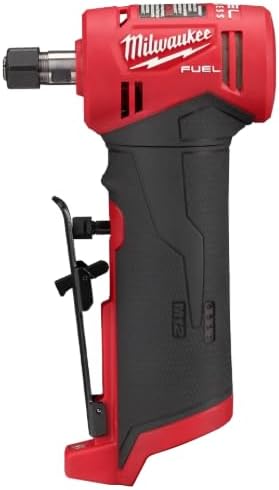 |  |  |  |
|---|---|---|---|---|---|---|
| Product | Milwaukee M12 Fuel Die Grinder | Milwaukee M12 Fuel Kit | Milwaukee M12 Fuel 2485-20 | Milwaukee M12 Fuel 1/4" Grinder | Milwaukee M12 Fuel 2-Battery | Milwaukee M12 Fuel Cutoff Tool |
| Brand | Milwaukee | Milwaukee | Milwaukee | Milwaukee | Milwaukee | Milwaukee |
| Best for | Best Overall | Runner-Up | Best for Tight Spaces | — | Best for Extended Use | Best for Cutting Metal |
| The listing says | POWERSTATE brushless motor Shadowless LED work light | Not stated | 20% more power than pneumatic 0.3 HP motor output | 1/4 right angle die grinder | 0.4 HP motor output 4-mode RPM control | Not stated |
| More information | Check Price on Amazon | Check Price on Amazon | Check Price on Amazon | Check Price on Amazon | Check Price on Amazon | Check Price on Amazon |
Head to Head on What Matters
Motor Power
The Milwaukee M12 Fuel 2485-20 and the Milwaukee M12 Fuel 2-Battery are the primary choices for power. The 2485-20 provides 0.3 HP, while the Milwaukee M12 Fuel 2-Battery increases this to 0.4 HP. These brushless motors are designed to outperform pneumatic tools.
Speed Control
Control is managed through RPM modes, which vary across the lineup. The Milwaukee M12 Fuel 2485-20 features a 3-mode control system for standard tasks. The Milwaukee M12 Fuel 2-Battery offers a 4-mode system with a variable-speed trigger, allowing for more precise adjustments.
Accessory Compatibility
These grinders are built for 1/4-inch accessories. The Milwaukee M12 Fuel 2485-20 is specifically noted as having optimum performance with 2-inch accessories. Other models in the lineup also accommodate this size, though the specific clearance varies based on the angle and barrel shape of the tool body.
What the Numbers Mean for You
When choosing a die grinder, the differences in motor output and speed control directly change how you work on a job site. A slight variation in motor output affects how quickly the tool removes material during heavy surface prep.
If you’re doing light metal cleaning, the lower output is often sufficient and helps preserve battery life. However, for cutting or deep grinding, the higher output prevents the tool from stalling under pressure. You should prioritize the 0.4 HP output when your primary tasks involve aggressive material removal.
The move from 3-mode to 4-mode RPM control is about precision.
The responsive variable-speed trigger is the key to this precision. It allows you to alter the speed dynamically based on the application. When you pair this with the brushless motor technology, you gain more run-time and a longer tool life.
Your choice should also consider the physical constraints of your workspace. The ergonomic barrel grip is designed specifically for comfort in tight spaces. When you combine this grip with the mobility of a cordless system, you can reach angles that are difficult to access with pneumatic alternatives.
Finally, consider the visibility of your work. The shadowless LED work light provides maximum visibility for fine detail tasks. If you’re working in dimly lit areas or deep inside machinery, this feature is essential for accuracy.
Always assess whether you need the kit version with extra batteries or just the tool itself. Having a spare battery ensures you can maintain momentum on long jobs without waiting for a charge. Matching the 0.3 or 0.4 HP output to your specific daily requirements ensures you aren’t overpaying for power you don’t need.
1. Electric – M12 Fuel 1/4 INCH Right Angle DIE Grinder
Best for: General metal cleaning and surface preparation tasks.
This model is a balanced choice for users who need a reliable tool for daily maintenance. Its shadowless LED light significantly improves visibility in dark or tight corners, which is a common challenge when working inside machinery.
The spindle lock is a standout feature, as it allows you to swap accessories using only one wrench. This design choice removes the frustration of juggling multiple tools while trying to reach into cramped engine bays or tight housings. By securing the shaft internally, the tool ensures that accessory changes are fast and precise.
It isn’t for users who require the highest power output for sustained, heavy-duty material removal. Its design prioritizes comfort and visibility over raw force. If your primary goal involves clearing large amounts of thick weld slag or deep rust, you may find the motor reaches its limit faster than a larger pneumatic or high-voltage electric unit.
The ergonomic barrel grip is specifically shaped to reduce hand fatigue during extended use. Because the tool is compact, it fits into areas where traditional grinders simply can’t reach. This makes it an essential addition for technicians who frequently switch between cleaning, surface prep, and light cutting tasks throughout a single shift.
The POWERSTATE brushless motor provides consistent torque for these moderate applications without the maintenance requirements of brushed alternatives. You get a tool that runs cooler and lasts longer under the stress of daily shop use.
Pros
- Integrated LED work light
- Convenient spindle lock mechanism
- Ergonomic barrel grip design
Cons
- Lacks the 0.4 HP output of higher-tier models
2. 2485-22 M12 FUEL Lithium-Ion Right Angle Die Grinder Kit
Best for: Users starting their M12 tool collection.
This kit provides a complete package, including the tool and a 2 Ah battery, making it a convenient entry point into the M12 ecosystem. It’s designed for those who don’t yet own compatible batteries or chargers. Because this is a kit, it isn’t for the professional who already has a large stock of M12 batteries and prefers to purchase only the bare tool.
If you’re just beginning to build your workshop, buying a kit ensures you have the necessary power source from day one. You receive a complete, integrated system with chargers and batteries included. This bundle removes the guesswork of ensuring your components match the tool’s voltage requirements.
However, the value proposition changes if you’re an established user. If your shelves are already lined with M12 batteries, this kit may be an inefficient investment. You would be paying for an extra charger and a 2 Ah battery that might not meet the runtime demands of your existing, high-draw equipment. In those cases, the bare tool is a more economical choice.
Pros
- Includes battery and charger
- Ready for immediate use
- Simplifies the initial purchase process for new users
Cons
- Specific feature specs not provided
This package functions as a bridge. It allows a novice to bypass the technical hurdles of selecting individual components. By providing everything in one box, it guarantees that the tool is ready to perform the moment it’s unpacked. It’s the most straightforward route to getting to work without needing prior knowledge of the Milwaukee battery lineup.
3. M12 FUEL 12V Lithium-Ion Brushless Cordless 1/4 in. Right Angle
Best for: High-power requirements in a cordless format.
With a 0.3 HP motor, this tool is built to compete directly with pneumatic alternatives while offering superior mobility. By removing the air hose, you gain access to tight spaces that previously required cumbersome setups. The 3-mode RPM control allows for necessary customization of speed, making it versatile for various metal tasks. It isn’t for someone who needs the extra precision of a 4-mode variable trigger, as this model lacks the most granular speed settings.
The POWERSTATE brushless motor technology ensures the tool maintains its rated output under load. This is a critical advantage when you’re working on demanding grinding applications where stalling would otherwise occur. Because it functions as part of the broader M12 system, you can leverage existing M12 REDLITHIUM battery technology to keep the tool running through extended shifts.
This grinder is specifically optimized for 2-inch accessories. When you pair the tool with this size, you achieve the best balance of torque and control. The listing doesn’t mention the consequences of using accessories larger than 2 inches. Always verify that your consumables match these optimized dimensions to ensure the tool performs as expected.
Pros
- High 0.3 HP motor output that delivers 20 percent more power than standard pneumatic tools.
- Brushless motor technology for longer tool life and consistent power delivery.
- Optimized for 2-inch accessories to maximize performance.
Cons
- Limited to a basic speed selection system, which restricts your ability to fine-tune speed for delicate finishing work.
- Tool-only configuration requires you to own or purchase M12 batteries separately.
This model is the ideal choice if you prioritize power density over the absolute highest level of speed modulation. It bridges the gap between traditional air-powered tools and modern cordless convenience without sacrificing the torque required for heavy-duty material removal. If your workflow involves frequent movement around a job site, the mobility provided by this unit is its most significant asset.
4. M12 FUEL 1/4″ Right Angle Die Grinder Kit
Best for: Compact work where space is limited.
This grinder centers on the 1/4-inch accessory standard. Its compact body is built specifically to navigate tight, cramped areas where larger tools simply can’t reach. By prioritizing a right-angle configuration, the tool allows you to maintain a clear line of sight while working in narrow gaps or behind obstructions. It’s the ideal choice for mechanics or fabricators who need accessibility above all else.
Because this model focuses on straightforward grinding, it avoids the complexity of specialized speed modes or high-horsepower motors. You should choose this tool when your primary goal is maneuverability rather than heavy material removal. It provides a consistent, reliable performance for standard tasks without the bulk of a larger, more powerful unit.
Pros
- Compact right-angle design
- Reliable 1/4-inch collet
Cons
- No advanced power or speed features listed
When deciding if this is the right tool for your project, consider the physical constraints of your workspace. If you’re working on a tight engine bay or a confined metal frame, the right-angle head provides the necessary clearance to complete the job. However, if your task requires aggressive grinding on thick steel, the lack of high-horsepower features means you’ll need to take more time to finish the work.
The 1/4-inch collet ensures that you can use a wide variety of standard grinding bits and burrs. This makes the tool highly versatile for general cleanup, deburring, and surface preparation. You get a tool that’s easy to handle and simple to operate. It’s designed to be the go-to solution for those everyday grinding jobs that happen in the most difficult corners of your workspace. By keeping the design focused, the tool remains lightweight and easy to control during extended use.
5. Electric – M12 Fuel 1/4 INCH Right Angle DIE Grinder
Best for: Extended use and high-demand applications.
This is the most capable model in the group, featuring a 0.4 HP motor and a 4-mode RPM control system. The variable-speed trigger is highly responsive, allowing you to adjust the speed on the fly. It isn’t for the hobbyist who only needs a tool for occasional light tasks, as the higher power and control modes are overkill for simple jobs.
The inclusion of a backup power supply is the defining feature here. It ensures you can cycle power sources without stopping your workflow, which is critical for professionals working in remote areas or tight spaces where a wall outlet is unavailable. This setup maximizes the benefits of the POWERSTATE Brushless Motor, which is engineered specifically to extend run-time and tool longevity under heavy loads.
By pairing this motor with four distinct speed modes, you gain the ability to match the tool’s output to the specific material or accessory you’re using. You can switch modes quickly to maintain control, ensuring the tool remains steady even when you’re working at maximum power.
Pros
- Powerful 0.4 HP output
- 4-mode RPM speed control
- Includes an extra power cell for longer runtime
- Enhanced mobility for tight access
Cons
- More complex to operate for beginners
- Higher power capacity exceeds the needs of light-duty hobbyists
While the learning curve is steeper due to the multiple speed settings, the trade-off is superior versatility. You aren’t just buying a grinder; you’re buying a system that adapts to the task at hand. If your work involves consistent, high-demand grinding, the extra battery capacity and motor output make this the most reliable choice for maintaining productivity throughout the entire workday.
6. M12 FUEL 3″ CUTOFF TL BT Cut-off Tool
Best for: Specialized metal cutting tasks.
This tool is designed specifically for cutting, providing a different functionality than the standard die grinders. It’s best suited for those who need to make clean, straight cuts in metal. It isn’t for users looking for a multi-purpose die grinder, as its design is optimized for a 3-inch cutoff wheel rather than general grinding or surface prep.
The 3-inch wheel configuration changes how you approach your workspace. Because the wheel is fixed for a specific radius and depth, it excels at slicing through thin-gauge steel, conduit, or threaded rod where a larger angle grinder would feel clumsy or oversized. You gain a level of maneuverability that larger, corded tools simply can’t replicate in tight quarters.
Think of this tool as a precision instrument rather than a heavy-duty material removal device. While a die grinder is meant to oscillate or spin burrs for shaping and smoothing, this cutoff tool focuses all its energy on creating a singular, narrow kerf. It works best when you need to trim a bolt to length or notch a piece of sheet metal without damaging the surrounding surface.
The listing doesn’t mention the consequences of using the cutoff tool for grinding or deburring. The tool is engineered to maintain a consistent speed under the specific load of a cutting disc. Respecting this design ensures the motor remains cool and the battery life stays efficient during repetitive tasks.
When selecting this tool, consider the nature of your typical projects. If your day-to-day work involves cutting through metal studs or PVC pipe, the dedicated 3-inch design provides the stability you need for a straight line. However, if your work requires switching between grinding, polishing, and cutting, you may find that a standard die grinder offers more versatility.
Always verify the thickness of the material you intend to cut. This tool operates best on materials that fall within the capacity of a 3-inch wheel. It’s a specialized solution for those who prioritize clean, controlled cuts over raw, aggressive grinding power.
Frequently Asked Questions
Is a bigger motor number always better?
A higher horsepower rating, like the 0.4 HP found in the Milwaukee M12 Fuel, is generally better for heavy-duty material removal. However, it may be unnecessary for light cleaning or detail work. A larger motor can also consume battery power faster. Choose based on your specific task rather than just the highest number.
What does it mean when a feature isn’t listed?
When a listing doesn’t mention a specific feature, like weight or dimensions, it simply means that information is unknown for that specific product. It doesn’t imply the tool is missing a part or lacks a function. Always compare the features you can see to ensure the tool meets your requirements.
How do I compare two different speed modes?
Comparing a standard speed-selection tool to one with an additional setting is about identifying how much control you need. A 4-mode system offers more granular speed adjustments, which is better for delicate work. A simplified speed-selection system is often easier to operate. If you work with many different materials, the additional speed setting provides better versatility for your projects.
Does a kit include everything I need?
A kit typically includes the tool, batteries, and a charger, providing a total solution for users without existing equipment. If you already have Milwaukee M12 batteries, you may prefer a tool-only model to avoid paying for accessories you don’t need. Always check the item description to confirm the contents of the package.
Conclusion
Choosing the right setup makes a world of difference when you’re tackling tight spaces or delicate metalwork. Before you head to the store, check your current battery collection to see if you already have the power you need. You’ll find that investing in the right accessories makes every project feel much smoother.

Hi, this is Cynthia A. Rose. Welcome to my Grinder related blog. Usually, I am busy with my kitchen and cooking all day. My main desire is to create a new recipe every day. But I have to use new tools every day to create new recipes. In this blog, I will share you how to use kitchen tools properly. I will not just share cooking related equipment, I will try to review all kinds of grinders like angle grinder among you. I hope my 12 years of experience will come in handy. Thanks!