Selecting an industrial right angle air grinder depends on whether you need precision for light metalwork or raw power for heavy grinding. These tools differ in motor strength, size, and ergonomic features, which dictate how they handle during long work sessions.
Best overall: Ingersoll Rand 5102MAX. This tool offers a balanced 0.4 hp motor and a lightweight design, making it the most versatile choice for general shop tasks and tight-space maneuvering.
Most powerful: Capri Tools CP32505. Featuring a robust 1 hp motor, this grinder is the top pick for users who need to tackle heavy-duty grinding applications without stalling under pressure.
Most compact: Chicago Pneumatic CP875. With its short 4.88-inch length and slim profile, this model is the clear winner for technicians working in extremely confined areas where larger tools simply won’t fit.
The rest of this guide is for professionals and home enthusiasts looking to match their specific project needs with a durable, efficient air-powered grinder.
How We Picked
Every selection had to provide specific technical data, including motor horsepower, RPM ratings, and physical dimensions, to ensure you can compare their capabilities accurately.
All 10 products side by side — scroll sideways to see every column.
| Top Pick | Best for Quiet Use | Best for Polishing | Best for High Torque | Best for Deburring | Best for Pistol Grips | Best for Disc Grinding | Best for Material Removal | |||
| Preview | 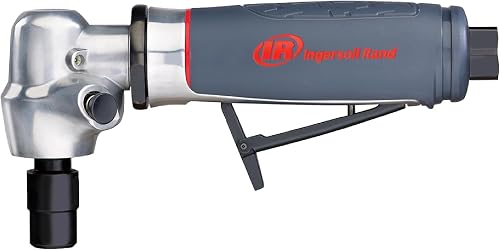 |  | 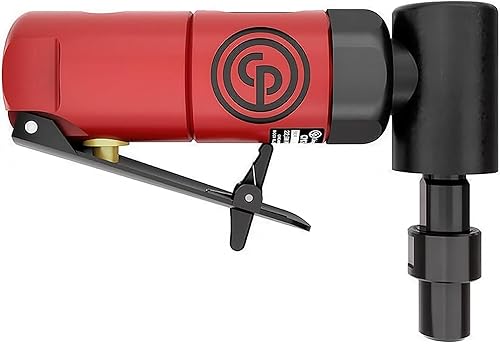 |  |  |  |  |  |  |  |
|---|---|---|---|---|---|---|---|---|---|---|
| Product | Ingersoll Rand 5102MAX | AIRCAT 6280 | Chicago Pneumatic CP875 | Dynabrade DGR51 | Capri Tools CP32505 | AIRCAT 6255 | JET JAT-416 | NEIKO 30060A | Astro Tools 30045 | Ingersoll Rand 5445MAX |
| Brand | Ingersoll Rand | AIRCAT | Chicago Pneumatic | Dynabrade | Capri Tools | AIRCAT | Jet | NEIKO | Astro Tool | Ingersoll Rand |
| Best for | Best Overall | Best for Quiet Use | Best for Polishing | — | Best for High Torque | Best for Deburring | — | Best for Pistol Grips | Best for Disc Grinding | Best for Material Removal |
| The listing says | 1/4" collet, 0.4 hp, 25,000 rpm 1.0-pound weight with spindle lock | 18,000 RPM, .75 HP non-stall motor Top-mounted speed control switch | 0.3 HP, 22,500 RPM free speed 4.88-inch length, 0.99 lb weight | Leading Manufacturer Of High-Quality Products International Renown For Our Diverse Range Of Award-Winning Products | 1 HP motor, 18,000 RPM Built-in air regulator dial | 18,000 RPM, .4 HP motor, 82 dBA For deburring, blending, and smoothing | 115-degree angled head Lightweight composite housing | 25,000 RPM, 1/4" collet pistol tool Right angle-head, pistol trigger grip | 4.5” disc, 7/8” arbor, 5/8"-11 thread 8.5” long compact size | 2.5 hp motor Governed motor optimizes air consumption |
| More information | Buy on Amazon | Buy on Amazon | Buy on Amazon | Buy on Amazon | Buy on Amazon | Buy on Amazon | Buy on Amazon | Buy on Amazon | Buy on Amazon | Buy on Amazon |
1. Ingersoll Rand 5102MAX 1/4″ Collet Air Die Grinder
Best for: General shop maintenance and daily metalwork.
This grinder features a 0.4 hp motor that reaches 25,000 RPM, providing steady power for cutting and polishing. Its composite housing and lightweight 1.0-pound design help reduce fatigue, which is helpful if you use the tool for hours at a time. While the Capri Tools CP32505 offers more horsepower, this model provides a better balance for those who prioritize ease of handling over raw force.
If you’re working in tight spaces, the right-angle configuration is the deciding factor. It allows for maneuvering where straight grinders can’t reach. However, if your primary task involves clearing heavy-duty steel, look elsewhere. This motor is optimized for precision work rather than brute strength. Pushing it against thick material will only stall the output.
The rear exhaust system directs air away from your face, keeping the workspace cleaner during operation. The spindle lock is a helpful touch that speeds up abrasive changes significantly. If you find yourself changing bits every few minutes, the time saved by this lock prevents significant downtime. Use this tool when your priority is consistent, lube-free performance in a clean, professional environment.
Pros
- Lightweight composite housing
- Convenient spindle lock
- Efficient rear exhaust
Cons
- Not for heavy material removal
- Limited to 0.4 hp
2. AIRCAT 6280 .75 HP Angle Die Grinder with Spindle Lock
Best for: Users who need high torque in a quiet package.
This unit boasts a non-stall motor capable of 18,000 RPM, making it a strong contender for demanding tasks. The patented silencing technology reduces noise to 79 dBA, which is a major benefit in shared shop environments. If you work in a confined space where sound echoes, this reduction saves your ears from the typical high-pitched whine of pneumatic tools.
The speed control switch sits at the top of the grip. This placement allows you to make quick adjustments with your thumb without losing your hold or stopping the work. The Erickson-style precision collet ensures your bits stay secure during operation, preventing vibration-induced slippage.
This grinder isn’t for someone seeking the lightest possible tool. The heavy-duty motor adds weight that you’ll notice during extended overhead work. If you’re grinding for long sessions at a time above shoulder height, the mass of the composite handle may cause fatigue. Use this tool when raw power and noise control take priority over portability.
Pros
- Powerful non-stall motor
- Quiet 79 dBA operation
- Easy top-grip speed control
Cons
- Heavier than compact models
- Lower RPM than smaller grinders
3. Chicago Pneumatic CP875
The CP875 is built for accessibility, measuring only 4.88 inches in length. Its 0.3 hp motor hits 22,500 RPM, providing plenty of speed for deburring and contouring small parts.
If you’re choosing between this and a larger general-purpose grinder, note that this tool is designed specifically for tight-quarters geometry. Use this model when your primary obstacle is physical space, such as working inside engine bays or cramped housings. If your task requires removing significant amounts of material, use a larger, straight-line grinder instead, as this tool’s 0.3 HP motor will stall under heavy pressure.
The aluminum housing with a composite over-sleeve provides a durable exterior that stands up to daily shop abuse. A built-in air regulator allows you to control the speed, giving you more precision on delicate surfaces. Always engage the safety throttle lever before connecting your air line to prevent accidental start-ups.
This model isn’t for someone who needs to perform heavy, aggressive grinding. Back off the pressure and let the high-speed rotation do the work to protect the motor from premature wear.
4. Dynabrade DGR51 Right Angle Die Grinder
Best for: Professionals requiring high-quality, reliable performance.
This model is designed with modern technology to meet the demands of professional users who need a consistent tool. It operates at 14,000 RPM and features a 0.5 hp motor, balancing speed and torque effectively. Unlike the AIRCAT 6280, which focuses on noise reduction, the Dynabrade is built for long-term durability in varied industrial settings.
If your work involves continuous production or heavy-duty grinding, the 0.5 hp motor provides the sustained power necessary to prevent stalling under load. Beginners often mistake this tool for a general-purpose grinder, but the high RPM requires a steady hand to avoid surface gouging. If you’re working on delicate finishes, choose a lower-speed model to maintain control.
The device is engineered to be modern and powerful, making it a staple for those who value brand reliability in their equipment. Because it lacks some of the specialized comfort features found on other models, it may not be the best choice for a hobbyist who only needs a tool for occasional light use.
Pros
- High-quality professional construction
- Reliable 0.5 hp motor
- Modern, durable design
Cons
- Lacks specialized ergonomic grips
- Higher learning curve for beginners
5. Capri Tools 1/4 in. 1 HP Air Angle Die Grinder
Best for: Heavy-duty applications requiring high torque.
This grinder is a powerhouse, sporting a motor that delivers 18,000 RPM. It’s designed to handle tough jobs that would stall out smaller tools, and the reduced vibration helps keep your hands steady. It’s much more powerful than the Ingersoll Rand 5102MAX, though it’s also larger and has a noticeable weight.
The 360-degree swivel rear exhaust is a standout feature, letting you vent air in any direction to avoid blowing debris back at yourself. The cushioned grip provides extra comfort for long sessions. This tool isn’t for someone who needs a lightweight grinder for fine detailing, as the extra power and size might feel like overkill.
Pros
- High 1 hp motor
- Low vibration levels
- Swivel exhaust prevents blowback
Cons
- Heavier than base models
- More power than needed for detailing
6. AIRCAT 6255 .4 HP Composite Right Angle Die Grinder
Best for: Quiet operation in smaller shops or home garages.
This composite grinder runs at 18,000 RPM with a 0.4 hp motor, providing a balanced middle ground for various tasks. Its patented silencing technology keeps noise at 82 dBA, which is manageable for daily use. If you work in a residential garage or a shared workshop, this noise reduction protects your hearing while maintaining consistent performance.
The ergonomic handle is built specifically for user comfort, making it a great choice if you suffer from hand fatigue during long sessions. Use this tool for precision tasks like deburring, high-speed blending, smoothing, and porting in confined areas where bulkier tools can’t reach.
However, it isn’t the right tool for heavy material removal. If your project requires clearing thick welds or deep rust, its power output is lower than that of the Capri Tools CP32505. Choosing this model for heavy-duty grinding will only lead to stalling under load and increased project time. Reserve the 6255 for finishing work where control and comfort are your primary goals.
Pros
- Very quiet operation
- Comfortable ergonomic handle
- Good for home and shop
Cons
- Lower power output
- Not for heavy-duty grinding
7. JET 1/4-Inch Angle Composite Die Grinder
Best for: Accessing hard-to-reach areas with its unique head angle.
The 115-degree angled head on the JAT-416 is its defining feature, allowing you to reach spots that standard 90-degree grinders cannot. It runs at 22,000 RPM and includes an advanced muffler system for quiet operation.
It’s a more specialized tool than the Chicago Pneumatic CP875, which uses a more traditional 90-degree angle. Use the JAT-416 when you need to maneuver around fixed components. Stick to a standard 90-degree model if your work is mostly on open, flat surfaces where the extra tilt provides no clearance advantage.
The composite housing makes it easy to clean, and the lockoff switch adds a layer of safety for the operator. You can use the built-in air regulator to dial in precise speed control for delicate material removal.
Pros
- Unique 115-degree head angle
- Quiet muffler system
- Easy-to-clean composite body
- Integrated speed regulation
Cons
- Specialized angle limits versatility
- Not for general flat grinding
8. NEIKO 30060A 1/4” Air Right Angle Die Grinder
Best for: Users who prefer a pistol-grip design.
This grinder breaks the mold with a pistol-grip handle, which feels more natural for some users than the traditional straight or angle-grip tools. It runs at 25,000 RPM and is very efficient, using only 4 CFM of air. The NEIKO 30060A features a pistol-grip design, whereas the Ingersoll Rand 5102MAX uses a straight-body configuration.
The paddle lever throttle allows for smooth speed feathering, giving you great control over your work. You can fine-tune the output using the built-in regulator with a flathead screwdriver or the included hex key. This adjustment is essential when switching between delicate polishing and aggressive weld prep.
This tool isn’t for someone who needs to reach into extremely tight spaces, as the pistol handle requires more clearance than the compact Chicago Pneumatic CP875. The pistol grip is best reserved for open surfaces where ergonomics and reduced wrist fatigue are your primary goals.
Pros
- Comfortable pistol grip
- Smooth speed feathering
- Low air consumption
Cons
- Bulkier than straight grinders
- Not for very tight gaps
9. Astro Tools 30045 ONYX 4.5″ Compact Air Angle Grinder
Best for: Heavy-duty grinding with 4.5-inch discs.
This is a more robust tool designed for 4.5-inch discs, making it a different beast than the small die grinders on this list. With 0.8 hp and 12,000 RPM, it’s built for serious metal removal. If you compare it to the Capri Tools CP32505, this model is clearly focused on disc-based grinding rather than precision die work.
The push-button spindle lock makes changing discs fast and simple. Use this tool when you need to clear material quickly using a 7/8” arbor hole disc. If your task requires a 5/8″-11 thread size, this unit provides the necessary mounting stability.
Because it’s a large-capacity tool, it isn’t suitable for fine porting or detail work in small spaces. At 8.5 inches long, it remains compact for its power class, but it won’t fit where a standard die grinder goes. Avoid using this for delicate finishing, as the high torque can easily mar a precision surface.
Pros
- Handles 4.5-inch grinding discs
- Strong 0.8 hp motor
- Fast spindle lock
Cons
- Not for precision detail work
- Bulkier than die grinders
10. Ingersoll Rand 5445MAX 4 1/2″ Air Angle Grinder
Best for: Large-scale industrial material removal.
This 2.5 hp angle grinder is engineered specifically for the hardest alloys. It balances significant force with a frame weighing just over 4 lbs, creating a power-to-weight ratio that minimizes operator fatigue during long shifts. If you’re grinding thick steel all day, this tool will reduce your total job completion time.
The governed motor is a critical feature here. It optimizes air consumption based on the load, which preserves your abrasive discs and extends the life of your consumables.
Productivity gains come from the tool-free adjustable guard and spindle lock. You can reorient the guard in seconds or swap discs using only a single spanner wrench. Avoid this unit for light hobby work, as the industrial-grade internal components are built for high-demand environments. Using it for small, delicate tasks often leads to over-grinding and wasted material.
Pros
- Massive 2.5 hp motor
- Tool-free guard adjustment
- Excellent power-to-weight ratio
Cons
- Excessive power for small jobs
- Heavier than standard grinders
How to Choose in Sixty Seconds
Motor Power and RPM
The most important factor is matching your motor power to your task. If you’re doing light work like deburring or polishing, a 0.3 hp to 0.4 hp motor is plenty. However, if you’re grinding through thick metal, you need a high-torque motor like the 1 hp model found in the Capri Tools CP32505. Always verify the RPM rating, as higher RPM doesn’t always mean better performance if the tool stalls under load.
Size and Ergonomics
Consider the space where you’ll be working. If your shop is full of tight corners, a compact tool like the Chicago Pneumatic CP875 is better than a larger pistol-grip grinder. Pay attention to the grip material and weight; composite housings offer a lightweight design, while aluminum is built for durability. If you have to use the tool all day, a model with low vibration and a cushioned grip will prevent long-term fatigue. Don’t underestimate the importance of the exhaust direction, as a swivel exhaust can save you from constant dust and air blowback.
Air Consumption
Every air grinder requires a certain amount of compressed air, measured in CFM (Cubic Feet per Minute). Before ordering, confirm your air compressor can handle the tool’s requirements at 90 PSI. If your compressor is too small, your grinder will lose power constantly, making it frustrating to use. Tools like the NEIKO 30060A are efficient at 4 CFM, which works well for smaller home compressors, while high-power industrial grinders may require more air volume to reach their full potential. Always ensure your air supply setup matches your tool’s needs to avoid power drop-offs during critical projects.
For most users, this specific Ingersoll Rand model provides the best balance of power and ergonomics for daily tasks. If you need more force for heavy metal removal, the Capri Tools CP32505 is the superior choice. Before you buy, ensure you have the correct air fittings and a clean, dry air supply to keep your new tool running smoothly for years.
Frequently Asked Questions
Do I need a specific air compressor size for these grinders?
Yes, your air compressor must provide enough CFM at 90 PSI to match the tool’s requirements. If your compressor is undersized, the grinder will lose power under pressure. Always check the CFM rating in the product data for each specific model to ensure your air supply system functions correctly.
Can I use these for polishing as well as grinding?
Yes, these grinders are versatile tools that accept various attachments, including polishing bits, sanding discs, and deburring heads. The key is to match the RPM of the tool to the rating of your abrasive or polishing accessory. For example, this Ingersoll Rand grinder is well-suited for light polishing tasks due to its controlled speed and lightweight design.
What maintenance is required for an air-powered grinder?
Regular maintenance is essential to extend the life of your pneumatic tool. This Ingersoll Rand grinder features a lube-free design. Additionally, keep the air exhaust clear of debris and check the collet regularly to ensure it isn’t worn out.
Are the collets on these grinders universal?
Most grinders listed use a standard 1/4-inch collet, which is the industry standard for die grinders. This allows you to use a wide range of common bits from different manufacturers. Some models, like the WORKPRO, include both 1/4-inch and 1/8-inch collets to support smaller detail work.
Conclusion
Selecting the ideal tool makes your daily tasks feel much lighter and more efficient. Once you’ve matched a model to your specific workspace needs, don’t forget to invest in high-quality abrasive discs. They’ll help you get the smoothest finish possible, so you’re ready to tackle your next big project with total confidence.

Hi, this is Cynthia A. Rose. Welcome to my Grinder related blog. Usually, I am busy with my kitchen and cooking all day. My main desire is to create a new recipe every day. But I have to use new tools every day to create new recipes. In this blog, I will share you how to use kitchen tools properly. I will not just share cooking related equipment, I will try to review all kinds of grinders like angle grinder among you. I hope my 12 years of experience will come in handy. Thanks!