Choosing the best 6 inch bench grinder depends on whether you need raw power for heavy material removal or precision for delicate tool sharpening. While motor horsepower and RPM are common metrics, the build quality and available work rests often define the actual experience. The DEWALT 6 Inch Grinder leads for general heavy-duty tasks, but variable speed and low-speed options exist for users who need more control over their projects.
All 10 products side by side — scroll sideways to see every column.
| Top Pick | Runner-Up | Also Great | ||||||||
| Preview |  |  |  |  |  |  |  | 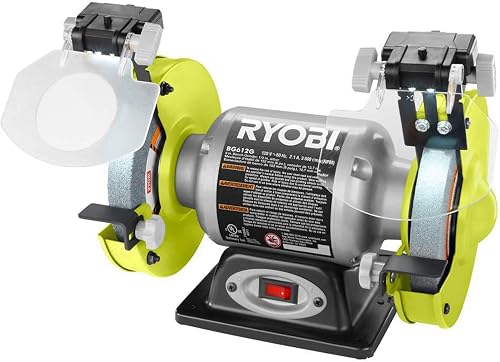 |  |  |
|---|---|---|---|---|---|---|---|---|---|---|
| Product | DEWALT 6 Inch Grinder | WEN BG625V Grinder | BUCKTOOL 6 Inch Grinder | BUCKTOOL Belt Sander Combo | JET 6-Inch Grinder | Genesis GBG600L Grinder | WEN BG4276 Grinder | RYOBI 6 Inch Grinder | Metabo 6-Inch Grinder | ATD Tools 10556 Grinder |
| Brand | DEWALT | WEN | Bucktool | Bucktool | Jet | Genesis | WEN | RYOBI | metabo | ATD |
| Best for | Best Overall | Runner-Up | Also Great | — | — | — | — | — | — | — |
| The listing says | 5/8 HP induction motor Cast iron base and housing | 2.5-amp motor, 2000 to 3400 RPM Flexible work light | 1/3HP motor, 1750 RPM 60-grit and 80-grit oxide wheels | 1/3HP, 3.5 Amp, 3450 RPM motor 2-Inch x 42-Inch sanding belt | 1/2-HP motor, 3,450 RPM 36-grit aluminum oxide and wire wheel | 1/2-HP induction motor 3,550 RPM no-load speed | 2.1-amp motor, 3450 RPM 6-by-3/4-inch wheels | LED bar graph voltage indicator Bright integrated flashlight | 400 W, 3.6 Amp 120V induction motor Adjustable eye shield and spark deflectors | 1/2 HP, 2.8 A, 120 Volt motor Shatter resistant eye shields |
| More information | Check Price on Amazon | Check Price on Amazon | Check Price on Amazon | Check Price on Amazon | Check Price on Amazon | Check Price on Amazon | Check Price on Amazon | Check Price on Amazon | Check Price on Amazon | Check Price on Amazon |
Head to Head on What Matters
Motor Power and Speed
Motor performance defines how a bench grinder handles resistance during use. The DEWALT 6 Inch Grinder, JET 6-Inch Grinder, and ATD Tools 10556 all feature 1/2 HP motors running at 3,450 RPM, which suit high-speed material removal. In contrast, the BUCKTOOL 6 Inch Grinder offers a lower 1750 RPM speed, designed for precision work to prevent overheating delicate blades. The WEN BG625V provides a variable speed range from 2000 to 3400 RPM, allowing users to adjust the speed to the specific material they’re working on.
Build and Stability
Stability is crucial for safety and accuracy in a workshop. Models like the DEWALT 6 Inch Grinder and JET 6-Inch Grinder utilize heavy-duty cast iron bases to reduce vibration. The BUCKTOOL 6 Inch Grinder and BUCKTOOL Belt Sander Combo also use cast aluminum bases with rubber feet to minimize movement. For those mounting their tool to a permanent stand, the JET 6-Inch Grinder and ATD Tools 10556 come with pre-drilled holes in their bases for secure installation.
Included Accessories
The accessories included with your grinder can save you from buying extra items later. The JET bench grinder includes a wire wheel, which is helpful for cleaning metal, while the BUCKTOOL Belt Sander Combo adds a 2×42-inch sanding belt for finishing work. Many models like the Genesis GBG600L and WEN BG4276 prioritize visibility by including flexible work lights. The BUCKTOOL bench grinder focuses on safety with transparent eye shields and spark arrestors included in the package.
What the Numbers Mean for You
When you see a 3,450 RPM rating, it indicates a high-speed grinder built for aggressive material removal. This is ideal for shaping heavy steel, but it can quickly overheat small tools or knife edges if you aren’t careful. If you intend to sharpen wood chisels or kitchen knives, a lower RPM model—like the 1,750 RPM BUCKTOOL bench grinder—is a better choice. These lower speeds keep the metal cooler, preventing it from losing its temper or hardness.
Motor amperage, such as the 3.6 Amps found in the Metabo bench grinder, indicates the machine’s capacity to handle sustained loads without stalling. Higher amperage generally suggests a more robust motor that can handle longer sessions without overheating. If you’re performing heavy-duty operations, prioritize models with at least 1/2 HP, such as the DEWALT or JET units, to maintain consistent power under load.
Pay close attention to the wheel grit included in the box. A 36-grit wheel is for coarse, fast removal, while 60-grit or 80-grit wheels are for finishing and sharpening. If you buy a unit with only coarse wheels, you’ll need to purchase finer replacements to achieve a professional edge.
Finally, consider the base construction. Cast iron bases, like those on the DEWALT or JET models, provide the mass needed to minimize vibration. If your workspace lacks a permanent mounting surface, look for models with rubber-footed bases or pre-drilled holes for secure bench attachment. Always prioritize stability; a vibrating grinder makes precision work impossible and increases the risk of the tool slipping during operation. Balance your need for raw speed against the risk of damaging your specific workpieces.
1. DEWALT 6 Inch Bench Grinder
Best for: Heavy-duty, high-speed grinding and material removal.
The DEWALT bench grinder features a 5/8 HP induction motor engineered for demanding tasks. Its heavy cast iron base and motor housing provide the stability needed when applying significant pressure to the grinding wheels. The 12-1/2-inch distance between the wheels provides space for grinding applications.
If you’re working with heat-sensitive materials, use caution. This model lacks variable speed control and operates at a fixed 3,450 RPM. Because it’s designed for rapid material removal, it can quickly overheat delicate edges. If your project requires precision sharpening, choose a slower tool or use light, intermittent passes to prevent damage.
Precision-machined aluminum tool rests allow you to position work accurately against the wheels. For the cleanest results, ensure your workspace allows for airflow near the rear exhaust ports built into the wheel guards. These ports help maintain smoother operation by clearing debris during use.
Pros
- Powerful 5/8 HP motor for heavy grinding.
- Durable industrial cast iron base construction.
- Wide wheel spacing for large projects.
- Rear exhaust ports assist in operation.
Cons
- Single speed only, lacks fine control.
- Fixed 3,450 RPM may be too aggressive for heat-sensitive sharpening.
2. WEN BG625V 2.5-Amp 6-Inch Variable Speed Bench Grinder with Flexible
Best for: Users needing adjustable speeds for various materials.
The WEN BG625V offers a variable speed range from 2000 to 3400 RPM. This range allows you to match the motor speed to the specific hardness of the material you’re grinding. Use the lower end of the spectrum for delicate sharpening tasks to prevent overheating the metal. Push toward the 3400 RPM limit when you need to remove material quickly from dull bits or heavy tools.
The inclusion of a flexible work light helps keep your project well-lit in dim garage conditions. It comes with two different grit wheels to get you started immediately. Use the 36-grit wheel for aggressive grinding and shaping, then switch to the 80-grit wheel for finer edge finishing.
Avoid stalling the motor under heavy pressure, as the electronic speed control is more sensitive to heat than a standard fixed-speed motor.
Pros
- Variable speed motor for flexible work.
- Includes a flexible work light.
- Comes with two different grit wheels.
- Backed by a two-year warranty.
Cons
- More complex electronics than fixed-speed models.
3. BUCKTOOL 6″ 1/3HP Low Speed Bench Grinder
Best for: Precision sharpening of blades and delicate tools.
The BUCKTOOL bench grinder runs at a slow 1750 RPM, which is ideal for avoiding heat buildup on sensitive blades. The tool-free adjustable work rests make it easy to set up for different angles without needing extra wrenches. While it’s excellent for precision, it isn’t the most efficient tool if your primary goal is the rapid removal of large amounts of metal.
If you’re working with heat-sensitive steel, the low-speed motor is your primary defense against ruining the temper of your edge. Choose this model when your priority is maintaining the hardness of a blade. If you’re instead tasked with grinding down thick, rusted iron or heavy stock, look for a higher speed unit to save time.
The inclusion of both 60-grit and 80-grit aluminum oxide wheels allows you to transition from rough shaping to fine honing on a single machine. Always use the 60-grit wheel for initial edge repair, then switch to the 80-grit wheel for the final finish. Beginners often make the mistake of pressing too hard, which causes the motor to bog down. Instead, use light, consistent pressure to let the abrasive wheels do the work.
Pros
- Slow speed prevents overheating tools.
- Tool-free adjustable work rests.
- Includes both 60 and 80-grit wheels.
- Stable cast aluminum base with rubber feet.
Cons
- Not designed for high-speed material removal.
4. BUCKTOOL 2×42″ Belt Sander 6″ Bench Grinder Combo
Best for: Metalworkers needing both grinding and sanding capabilities.
The BUCKTOOL Belt Sander Combo is a hybrid tool that handles both grinding and belt sanding. The belt can tilt from 0 to 90 degrees, which is useful for different sanding angles on wood or metal. It includes a standard-sized grinding wheel for sharpening tasks. This unit is quite large, so it isn’t for those with limited workbench space who only need a simple grinder.
If you’re working with metal, use the cast iron work table to gain the necessary support during sharpening. Switch to the cast aluminum table when your project involves wood. The sturdy cast iron base with rubber feet prevents vibrations, but you must ensure your bench is heavy enough to handle the 3450 RPM motor speed.
Pros
- Versatile belt and wheel combo.
- Belt tilts 0 to 90 degrees.
- Includes two separate worktables.
- Quick-release mechanism for fast belt changes.
- Induction motor maintains power under load.
Cons
- Larger footprint than a standard bench grinder.
- Requires specific table selection for material type.
Avoid the mistake of using the wrong table for your material, as this sacrifices stability. This ensures your 4480 FPM belt speed remains consistent across your workpiece.
5. JET 6-Inch Bench Grinder w/ Wire Wheel
Best for: Demanding environments requiring a professional-grade tool.
The JET 6-Inch Grinder features a 1/2 HP motor and totally enclosed, pre-lubricated ball bearings for long-term reliability. It includes a crimped wire wheel, which is a great addition for cleaning rust or paint off metal parts. The heavy cast iron construction makes it very stable, but it’s a heavier unit that requires a sturdy mounting surface.
If your workspace lacks a dedicated pedestal or a reinforced workbench, you’ll struggle to manage the vibrations at 3,450 RPM. Always bolt the pre-drilled base directly to a solid surface to prevent the unit from walking during heavy grinding tasks. While the 36-grit vitrified aluminum oxide wheel is excellent for aggressive material removal, avoid using it on delicate finishes that require a finer abrasive.
Pros
- Includes a useful crimped wire wheel for surface preparation.
- Totally enclosed ball bearings ensure internal durability.
- Heavy-duty cast iron construction minimizes tool chatter.
- Pre-drilled base allows for secure, permanent mounting.
- Adjustable eye shields and spark guards improve user safety.
Cons
- Requires a permanent mount due to significant weight.
- High RPM speed isn’t ideal for heat-sensitive materials.
6. Genesis GBG600L 6″ Bench Grinder with Dual
Best for: Projects where extra visibility is required.
The Genesis GBG600L features dual gooseneck lights, providing excellent illumination for detailed work. Its 1/2 HP motor runs at 3,550 RPM, making it effective for general grinding tasks. While the lights are a great feature, the unit is a standard single-speed grinder and lacks the precision of low-speed models.
If you’re grinding delicate tool edges, the high constant speed of 3,550 RPM risks overheating the metal. Use this machine for heavy material removal or rough shaping where heat buildup is less critical. If you need to sharpen fine chisels, switch to a variable-speed unit to prevent drawing the temper from the steel.
Many users mistakenly ignore the shaft diameter, which determines compatibility with aftermarket wheels. This unit is compatible with most standard aftermarket wheels.
Pros
- Dual flexible lights for better visibility.
- Quiet induction motor with sufficient power for most tasks.
- Standard wheel size for most home workshops.
- Simple, straightforward operation.
Cons
- Fixed speed limits its versatility.
- High RPM can overheat sensitive metal edges.
7. WEN BG4276 2.1-Amp 6-Inch Single Speed Bench Grinder with Flexible
Best for: General home shop tasks and knife sharpening.
The WEN BG4276 is a straightforward, single-speed grinder that includes a flexible work light for convenience. Its 2.1-amp motor spins the 6-by-3/4-inch wheels at 3450 RPM. This makes it ideal for reviving dull knives, drill bits, and rusted hand tools.
If you’re removing heavy material from large steel stock, this motor will stall under intense pressure. Use this machine for light-duty maintenance and edge refinement rather than aggressive metal removal. If you need to grind thick steel or perform continuous heavy-duty work, look for a more powerful motor instead.
The package includes a 36-grit wheel for initial shaping and a 60-grit wheel for finer finishing. Always adjust the eye guards before starting the motor to ensure safety during operation. The flexible light helps you spot burrs or uneven edges while you work.
Pros
- Flexible work light illuminates the project.
- Includes 36-grit and 60-grit wheels.
- Compact footprint for small workspaces.
- Two-year warranty coverage.
Cons
- Lower torque than more powerful competitors.
- Single-speed motor limits versatility for delicate tasks.
8. RYOBI GIDDS2-3554576 6″ 2.1 Amp Grinder with Led Lights
Best for: Users who want integrated voltage detection features.
The RYOBI 6 Inch Grinder stands out by including an LED bar graph that indicates voltage levels. The higher the voltage sensed, or the closer you’re to the source, the more LEDs light up. This visual feedback helps you identify live wires before you begin grinding.
It also has a built-in flashlight that illuminates your work area. You can use this light independently of the voltage detection function, even when the motor is off. This is a unique feature set, but it prioritizes electrical diagnostic tools over the raw grinding power found in professional-grade machines.
If you’re simply grinding metal in a shop with known power sources, rely on the flashlight to improve visibility.
Pros
- Built-in LED voltage indicator.
- Independent work light.
- Compact and user-friendly.
- Useful for electrical-focused workshops.
Cons
- Niche features may not suit every user.
- Prioritizes diagnostics over raw grinding power.
9. Metabo 6-Inch Heavy Duty Bench Grinder
Best for: Heavy-duty, low-vibration professional grinding.
The Metabo 6-Inch Grinder is built for maintenance-free use with a 400 W induction motor. Its vibration-dampening rubber feet and low-noise design make it comfortable for extended use in a workshop. It’s a highly capable machine, though it’s a more premium option that might be overkill for occasional hobbyist use.
If you’re performing precision metalwork, the integrated LED work lights provide the clarity needed to see fine details. Use the included 36 P wheel for rough material removal and the 60 N wheel for finer finishing tasks. Because the motor runs at 3,600 RPM, it handles consistent pressure without stalling.
If your shop requires versatility, this unit accepts 8-inch wire wheels for heavy cleaning or deburring. Avoid using this grinder for tasks requiring variable speeds, as the single-phase induction motor is designed for a constant, steady output.
Pros
- Low-vibration and low-noise operation.
- Integrated LED work lights.
- Compatible with 8-inch wire wheels.
- Maintenance-free induction motor.
Cons
- Fixed speed may not suit delicate materials.
10. ATD Tools 10556 6″ 1/2 HP Bench Grinder
Best for: Beginners who want a simple, ready-to-use setup.
The ATD Tools 10556 comes with a magnifying eye shield, which helps when working on small, intricate parts. It includes a dust-proof switch and a cooling tray, making it very user-friendly for a home garage. This model is a great all-rounder, but it doesn’t offer the variable speed control found in more advanced models.
If you’re grinding small hardware or sharpening standard blades, the fixed 3,450 RPM speed is ideal. However, if you work with heat-sensitive materials that require slower speeds to prevent burning, choose a variable speed model instead. You can identify your needs by checking if your projects involve delicate metals or plastics.
The base features pre-cast holes designed for mounting to a stand or workbench. Use these to secure the 21-pound unit, as mounting prevents the vibration that ruins precise edges.
Pros
- Includes a magnifying eye shield.
- Built-in cooling tray.
- Dust-proof switch for longevity.
- Pre-cast holes for easy mounting.
Cons
- Basic single-speed motor design.
The DEWALT 6 Inch Grinder is the top choice for those who need a reliable, heavy-duty tool that can handle continuous work. If you’re a hobbyist who isn’t sure which speed you need, the WEN BG625V is the safer choice because its variable speed allows you to experiment with different materials and techniques. For your next step, confirm the space available on your workbench and ensure you have a secure, flat surface to mount your new tool before you make your final selection.
Related guides
- Dewalt Cordless Angle Grinder: Ultimate Power and Precision for Professionals
- 10 Best Dewalt Angle Grinder Tools for Precision and Power
- 10 Best Variable Speed Angle Grinder Milwaukee Review: Power, Precision, and Performance
Frequently Asked Questions
Is a higher RPM number always better for a bench grinder?
Not necessarily. A higher RPM, such as 3,450, is better for fast material removal and general grinding. However, if you’re sharpening knives or chisels, a lower RPM is better because it prevents the metal from overheating and losing its hardness. Choose a higher speed for raw power and a lower speed for delicate, heat-sensitive precision work.
What does the motor horsepower mean for my daily work?
Horsepower indicates the motor’s ability to maintain speed under load. A 1/2 HP motor is capable of maintaining speed and less likely to stall when you press a heavy piece of metal against the wheel. If you only perform light tasks like occasional sharpening, a smaller motor is fine. For heavy-duty industrial work, prioritize higher horsepower to ensure the tool keeps running smoothly.
How do I compare grinders with different grit wheels?
Grit numbers indicate the coarseness of the wheel. A lower number, like 36-grit, is coarse and meant for fast material removal. A higher number, like 80-grit or 100-grit, is fine and meant for finishing and sharpening. Most grinders include one of each to cover both bases. You can always replace these wheels later with specialized versions if your specific project requires a different finish.
Does the base material affect the grinder’s performance?
Yes, the base material directly impacts stability and vibration. Cast iron bases are heavy and absorb vibration well, which leads to a smoother grinding experience and more accurate results. Lighter aluminum bases are easier to move but may vibrate more during heavy use. If you plan to do a lot of grinding, a heavy, stable base is a significant advantage for your comfort and safety.
Conclusion
Once you’ve picked your machine, don’t forget to invest in a quality dressing tool to keep your wheels flat and true. You’ll find that regular maintenance makes every project safer and much smoother. It’s time to head to the workshop and finally get those dull blades back in perfect shape.

Hi, this is Cynthia A. Rose. Welcome to my Grinder related blog. Usually, I am busy with my kitchen and cooking all day. My main desire is to create a new recipe every day. But I have to use new tools every day to create new recipes. In this blog, I will share you how to use kitchen tools properly. I will not just share cooking related equipment, I will try to review all kinds of grinders like angle grinder among you. I hope my 12 years of experience will come in handy. Thanks!