Selecting the best angle grinder to cut bricks depends on your workload and power requirements. Some models focus on safety features like kickback brakes, while others prioritize dust control or high-volume output. These tools vary by motor size, power source, and the specific attachments included in the kit.
Best overall: Milwaukee M18 Fuel Grinder, which features an electronic clutch for kickback protection and overload protection to help keep the motor running longer during tough masonry tasks. Best for dust control: DEWALT Dust Shroud Grinder, because it includes a specialized shroud and a quick connector to attach a vacuum, which helps keep your workspace much cleaner while cutting. Best for heavy duty: Makita SJS Grinder, which uses a mechanical clutch system to protect the motor and gears from damage when the wheel hits a hard spot in the brick.
This guide is for anyone looking to tackle brick cutting projects, from home DIYers to those needing a reliable tool for professional tasks.
How We Picked
We compared 48 different angle grinder listings to find the most capable options for cutting brick. To earn a spot, each product had to clearly state its motor specs, safety features, and the specific attachments included in the box. We removed any models that didn’t provide enough detail on how they handle debris or protect the user during operation. Our selections focus on tools that balance raw power with the features necessary to manage the unique challenges of cutting through stone and masonry.
All 10 products side by side — scroll sideways to see every column.
| Top Pick | Best for Safety | Best for Dust Control | Best for High Volume | Best for Tight Spaces | Best for Heavy Duty | Best for Continuous Use | Best for Slim Grips | Best for Large Cuts | Best for Masonry Kits | |
| Preview |  |  |  |  |  |  |  |  | 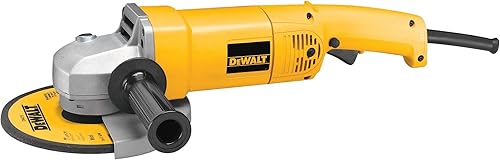 |  |
|---|---|---|---|---|---|---|---|---|---|---|
| Product | Milwaukee M18 Fuel Grinder | DEWALT 20V MAX Grinder | DEWALT Dust Shroud Grinder | RYOBI 18V HP Grinder | DEWALT 11 Amp Grinder | Makita SJS Grinder | Makita Paddle Switch Grinder | Bosch GWS8-45 Grinder | DEWALT 7-Inch Grinder | KSEIBI Concrete Grinder |
| Brand | Milwaukee | DEWALT | DEWALT | RYOBI | DEWALT | Makita | Makita | Bosch | DEWALT | KSEIBI |
| Best for | Best Overall | Best for Safety | Best for Dust Control | Best for High Volume | Best for Tight Spaces | Best for Heavy Duty | Best for Continuous Use | Best for Slim Grips | Best for Large Cuts | Best for Masonry Kits |
| The listing says | Electronic clutch for kickback protection Overload protection for motor life | Brushless motor needs no brush changes Brake stops wheel in 2 seconds | DWV9000 quick connector for vacuum Adjustable shoe for depth control | 11 amps of corded performance Heat management system for durability | 11 Amp 11,000 RPM motor Dust ejection system protects motor | 13.0 AMP motor with variable RPM SJS technology prevents gear damage | 7.5 AMP motor in 4.5 pound tool 2 to 1/2 inch barrel grip | 7.5 amp motor delivers 11,000 RPM Slim-grip design for comfort | 13 Amp motor delivers 8,000 RPM Tool-free keyless spark guard | 11.5-AMP 1400W motor reaches 8,500 RPM Includes grinder, shroud, and accessories |
| More information | Check Price on Amazon | Check Price on Amazon | Check Price on Amazon | Check Price on Amazon | Check Price on Amazon | Check Price on Amazon | Check Price on Amazon | Check Price on Amazon | Check Price on Amazon | Check Price on Amazon |
1. Milwaukee 2880-20 M18 Fuel Brushless Lithium-Ion 4-1/2 in. / 5
Best for: Users needing a versatile, cordless tool for brick.
This tool is built for those who want to move around freely without a power cord getting in the way. The electronic clutch provides kickback protection, which is a major help when the blade catches in dense material. Its overload protection helps extend the motor life, so it can handle the stress of cutting brick without failing early.
If you’re working with thick masonry, rely on the 5/8″-11 spindle. It allows you to swap in common grinding accessories quickly. Use the anti-vibration side handle to maintain control during long sessions; skipping this attachment increases fatigue and reduces precision.
Pros
- Electronic clutch for kickback protection
- Overload protection for motor longevity
- Anti-vibration handle improves user comfort
Cons
- Battery and charger sold separately
2. DEWALT 20V MAX* Angle Grinder Tool Cordless Brushless
Best for: Professionals prioritizing advanced safety features.
The brushless motor on this model is designed to run efficiently without needing brush changes. Its kickback brake is a standout feature, as it can stop the wheel in two seconds or less if it senses a pinch or stall. This helps reduce tool movement and keeps the operator safer during difficult cuts.
This tool uses a two-stage trigger system, which means it requires two actions to start. This might feel slow to some users who are used to a simple on/off switch, but it’s a built-in safety measure. It isn’t ideal for someone who finds multi-step triggers cumbersome for quick, repetitive tasks.
If you experience a power outage, the E-Switch Protection forces you to cycle the trigger off and then on again to restart. This prevents the tool from spinning unexpectedly once power returns. If you’re working in an environment with unstable power, expect this feature to add a few seconds to your recovery time.
Pros
- Fast electronic brake stops wheel
- Brushless motor requires no maintenance
- E-Switch protection prevents accidental restarts
Cons
- Two-stage trigger requires more effort
3. DEWALT Angle Grinder With Dust Shroud Kit
Best for: Users who need to manage brick dust.
This kit is designed specifically for people who want to keep their workspace clean. The adjustable shoe on the shroud allows you to change the depth of your cut easily, while the plunging system improves dust collection at the start and finish of every line. It connects directly to a vacuum using the included DWV9000 quick connector.
With a 13 Amp motor, it provides 17000 UWO for heavy-duty cutting. If you’re working on long, straight lines, the outer blade guide helps you maintain precision by clearly indicating the blade direction.
However, the shroud makes the tool larger and slightly more awkward to maneuver in tight spaces compared to a standard grinder. Don’t use this for overhead work or in cramped corners where the shroud prevents the blade from reaching the edge of your material. It isn’t for users who need a compact, lightweight tool for quick, small-scale touch-ups.
Pros
- Includes shroud for dust collection
- Adjustable shoe for depth control
- Powerful 13 Amp motor performance
Cons
- Shroud increases tool bulk
4. RYOBI 18V ONE+ HP Brushless 4-1/2 in. Angle Grinder
Best for: High-volume projects where speed matters.
This grinder delivers 11 amps of corded-like power in a cordless package. It’s engineered for efficiency, capable of making up to 210 cuts on a single charge. This capacity makes it a strong candidate for long days on the job site where you can’t stop to swap batteries constantly.
The tool features an advanced heat management system to keep the motor running during demanding tasks. If you notice the tool getting hot during heavy grinding, stop and let it cool; this system is designed to extend the tool’s life, but it works best when you manage the workload.
Because it’s part of the RYOBI 18V ONE+ system, you must have compatible batteries on hand. Always check your existing battery capacity before starting a large project, as the 210-cut rating assumes a fully charged, high-performance battery.
Pros
- High capacity for many cuts
- Cordless convenience with strong power
- Heat management extends tool life
Cons
- Batteries sold separately
5. DEWALT 11 Amp Grinder
Best for: High-power corded masonry work.
This is a robust corded option that’s perfect for those who don’t want to worry about battery life. The 11 Amp motor is designed for fast material removal, which is ideal when you have a lot of brick to cut. It also features a dust ejection system that blows debris out of the vents to protect internal parts.
The no lock-on paddle switch is a safety feature that requires you to hold the tool to keep it running. While this is great for safety, it can lead to hand fatigue if you’re performing long, continuous cuts. If your project involves hours of steady grinding, you’ll likely find the lack of a lock-on switch exhausting. Choose this model when safety and intermittent use are your priorities. If you require extended, hands-free operation, look for a tool with a lock-on mechanism instead.
The low-profile gear case helps when you must reach into tight corners. You can rotate the One-Touch Guard 360 degrees with a single action. Use the quick-change release to swap wheels without hunting for a wrench.
Pros
- Dust ejection system protects motor
- Quick-change wheel release system
- Powerful 11 Amp motor
Cons
- No lock-on switch for continuous use
6. Makita 9565CV 5″ SJS™ High-Power Angle Grinder
Best for: Heavy-duty, long-term masonry projects.
The standout feature is the SJS mechanical clutch. It prevents gear damage by allowing the drive shaft to slip if the wheel is forced to stop. This makes the tool durable for heavy cutting tasks where binding is common.
You can match the speed to the application using the variable speed dial, which ranges from 2,800 to 10,500 RPM. Use lower speeds for delicate finishes and higher speeds for aggressive grinding. If you notice the motor struggling under a heavy load, the constant speed control automatically applies additional power to maintain your pace.
Soft start technology suppresses the initial torque reaction, ensuring smooth start-ups and extending the life of the internal gears. This is a professional-grade machine powered by a 13.0 AMP motor. If your work involves constant, high-resistance material, the SJS system is your primary defense against motor failure.
Pros
- SJS clutch protects motor gears
- Variable speed for material control
- Constant speed maintains power
Cons
- Heavier than basic models
7. Makita 9557PBX1 4-1/2″ Paddle Switch Cut-Off/Angle Grinder
Best for: Simple, comfortable, and frequent use.
This grinder is designed to be compact and easy to hold. The barrel grip is slim, which makes it very comfortable for long periods of work. It also uses labyrinth construction to seal the motor from dust, which helps it last longer in dirty environments like a brick-cutting site.
The paddle switch is large, making it easy to engage even when wearing work gloves. It’s a very straightforward tool with fewer electronic bells and whistles. It isn’t for someone who needs high-end features like variable speed or electronic brakes.
If you’re working in remote locations, the AC/DC switch allows for use with alternative power sources. The 7.5 AMP motor provides high output despite the tool weighing only 4.5 pounds.
Avoid this model if you require precision speed control; the motor is built for raw, continuous output. You can engage the lock-on feature for long tasks, but be aware that it lacks the safety of an automatic brake. Use this tool when durability in dusty conditions matters more than advanced software.
Pros
- Slim barrel grip for comfort
- Dust-sealed motor and bearings
- Large, easy-to-use paddle switch
Cons
- Lacks advanced electronic controls
8. Bosch GWS8-45 4-1/2 In. Angle Grinder
Best for: Tight spaces and precision work.
This model features a slim-grip design that feels natural in the hand, reducing fatigue during extended use. The 7.5 amp motor delivers 11,000 no-load rpm, providing sufficient speed for standard cutting and grinding tasks.
If you notice the tool suddenly stopping, don’t assume it’s broken. The “service minder” brushes are designed to cut power when maintenance is required, effectively eliminating guesswork regarding internal wear.
The side handle offers improved control for specific angles but lacks the versatility of models with more mounting points. However, if your project requires frequent adjustments for overhead or awkward positions, this limited configuration may prove restrictive compared to three-position alternatives.
Directed air flow diverts dust away from vital internal components, which significantly extends the tool’s lifespan. While this is a reliable choice for precision work, it isn’t built for heavy-duty, all-day masonry demolition. If your work involves thick concrete or deep metal cutting, look for a model with higher amperage.
Pros
- Slim grip for outstanding comfort
- Maintenance-free brush alerts
- Directed air flow prevents dust
Cons
- Limited handle positions restrict utility
9. DEWALT 7-Inch Grinder
Best for: Making deep, large-scale brick cuts.
The 7-inch wheel size is the primary reason to choose this model, as it allows for significantly deeper cuts than standard 4.5-inch grinders. It’s built for heavy-duty applications where you must cut through thick masonry, concrete, or stone.
Because the tool features a 13 Amp motor delivering 8,000 RPM, it provides a high power-to-weight ratio. If you’re working on demanding metal or masonry projects, this motor ensures the tool doesn’t bog down under load. The spindle lock enables single-wrench wheel changes, which is critical for fast disc swaps during a long shift.
Because it’s larger and more powerful, it’s heavier and requires two hands to manage safely. If you’re performing precision detail work on small surfaces, choose a smaller grinder instead. This tool is intended for high-output, heavy-duty material removal. If you see external brush caps, you know the tool is designed for easy field servicing to keep it running across job sites.
Pros
- Large 7-inch wheel for depth
- Tool-free guard adjustment
- Field-serviceable brush caps
Cons
- Heavier and bulkier design
10. KSEIBI 5-Inch Concrete Angle Grinder Kit
Best for: A complete, ready-to-use masonry kit.
This kit arrives with everything needed to start immediately, including a dust-extraction shroud, a diamond cup wheel, and a cutting wheel. The 11.5-amp motor features pure-copper windings that run cooler, a vital advantage for sustained heavy work on concrete, brick, and stone. You can mount the auxiliary handle in three positions to suit left-handed, right-handed, or top-grip styles, while the lock-on button prevents trigger fatigue during long grinding passes.
The dust shroud captures debris at the source, which improves visibility and reduces cleanup. If you’re prepping floors or removing adhesive, connect the shroud to a vacuum to keep the air clear. However, if you already own high-quality discs and only require the bare tool, the included accessory bundle may feel like unnecessary clutter. Use the diamond cup wheel for surface grinding and switch to the cutting wheel for metal or ceramic tile. Keep the spare carbon brushes in the carry bag; replacing them when worn will significantly extend the life of your motor.
Pros
- Complete starter kit
- High-efficiency copper motor
- Three-position handle
Cons
- Many parts to track
How to Choose in Sixty Seconds
Which motor size do I really need?
For most home brick projects, a mid-range motor provides plenty of power. If you’re doing light work or small repairs, a smaller motor keeps the tool lighter and easier to hold for long periods. However, if you’re cutting deep into thick brick or stone walls, you’ll notice the difference with a 13 Amp motor. Larger motors maintain speed better under load, which stops the blade from stalling. Always check the Occupational Safety and Health Administration guidelines regarding silica dust when working with masonry, as using the right motor speed and dust control is vital for your long-term health.
Is a cordless or corded grinder better for brick?
Cordless grinders provide convenience when working on walls or in areas without power outlets. Corded grinders are the better choice if you have a massive amount of cutting to do, as you never have to stop for battery swaps. If you go cordless, make sure you have enough high-capacity batteries to last through your project.
Do I really need a dust shroud?
If you’re cutting brick inside or in an enclosed area, a dust shroud isn’t optional—it’s essential. Brick cutting creates a massive amount of fine dust that’s hard to manage. A shroud connects to a vacuum and captures the dust at the source, which protects your lungs and keeps your work area clean. If you only work outside in an open area with plenty of wind, you might get away without one, but it still helps with visibility. For any serious masonry work, look for a kit that includes a shroud or ensure your model has a compatible one available as an add-on.
Related guides
- 10 Best Angle Grinder for Cutting Bricks: Top Picks for Precision Cuts
- Best Angle Grinder Disc For Cutting Metal: Top Choices for Precision Cuts
- Angle Grinder for Cutting Bricks: Top Blades and Tools Reviewed
Frequently Asked Questions
What should I look for in a brick-cutting blade?
You must use a diamond-segmented blade specifically rated for masonry or brick to handle high heat and abrasion. These blades cut faster and last longer than standard metal-cutting discs. Always check that the blade’s maximum RPM rating matches or exceeds your grinder’s top speed before use.
How do I maintain my grinder after cutting brick?
Brick dust can quickly destroy internal motor components if not cleaned regularly. After every use, use compressed air to blow out the vents and gear case area. Keeping your tool clean and storing it in a dry place will significantly extend its operational life.
Is the simplest grinder on the list enough for my project?
The Makita Paddle Switch Grinder is a reliable, durable tool for standard brick-cutting tasks. It lacks electronic speed controls and braking systems, focusing instead on a simple, robust design. This makes it an ideal, low-maintenance choice for home DIYers performing straight cuts.
What goes wrong first on these tools when cutting brick?
Excessive dust ingress is the most common cause of motor and gear failure when cutting brick. Models like the Makita SJS Grinder use specialized systems to keep silica dust away from vital internal parts. Avoid forcing the tool, as this causes overheating and shortens its lifespan.
Closing
For most users, the Milwaukee M18 Fuel Grinder stands out as the best overall choice due to its balance of cordless freedom and safety features like kickback protection. If you’re focused on keeping your workspace clean, the DEWALT Dust Shroud Grinder is the clear winner, providing the tools needed to manage dust from the start.
Before you begin, verify your specific material. Use a diamond cup wheel for surface grinding on concrete or brick, but switch to a standard cutting wheel for metal tasks. If you’re working in tight spaces, prioritize models with low-profile gear cases to ensure you can reach the surface without binding the tool.
Always wear proper eye and respiratory protection. Brick cutting is a demanding task that generates significant debris. Take your time, keep your tool’s intake vents clear of dust to prevent motor overheating, and ensure your batteries are fully charged before beginning your work to avoid mid-cut stalls.

Hi, this is Cynthia A. Rose. Welcome to my Grinder related blog. Usually, I am busy with my kitchen and cooking all day. My main desire is to create a new recipe every day. But I have to use new tools every day to create new recipes. In this blog, I will share you how to use kitchen tools properly. I will not just share cooking related equipment, I will try to review all kinds of grinders like angle grinder among you. I hope my 12 years of experience will come in handy. Thanks!